 Prestige Awards 2025/26 Winner
Fire Door Regulations After the Building Safety Act 2022
 Fire Door Range team·7 min read
The Building Safety Act 2022 received Royal Assent in April 2022 and has been rolling out in phases since. Born from the recommendations of the Grenfell Tower Inquiry, it fundamentally reshapes how buildings are designed, constructed, and managed throughout their lifecycle. For anyone who specifies, installs, or maintains fire doors, the implications are substantial — and ignorance is no longer a defensible position.
What Changed
The Act introduced the concept of the "Accountable Person" and the "Principal Accountable Person" for higher-risk buildings, defined as residential buildings at least 18 metres tall or with at least seven storeys. These individuals bear legal responsibility for assessing and managing building safety risks, including the condition and compliance of fire doors. The Building Safety Regulator (BSR), housed within the Health and Safety Executive, now oversees the safety of these buildings and has enforcement powers including the ability to issue compliance notices, impose fines, and in serious cases pursue criminal prosecution.
A key requirement is the "golden thread" of building information — a digital record that must be created and maintained throughout a building's lifecycle. For fire doors, this means keeping detailed records of every door installed: the manufacturer, product certification, date of installation, maintenance history, and any modifications. If a fire door is replaced or repaired, the golden thread must be updated. This level of traceability is unprecedented and applies retrospectively to existing higher-risk buildings, not just new builds.
Who Is Affected
While the Act's most stringent requirements target higher-risk residential buildings, its influence extends much further. The Fire Safety (England) Regulations 2022, which complement the Act, require the Responsible Person for any multi-occupied residential building with two or more sets of domestic premises to carry out quarterly checks on all fire doors in communal areas. Flat entrance doors must be checked annually. These obligations apply regardless of building height, meaning landlords and managing agents of low-rise blocks are equally affected.
Beyond residential, the Act has raised the bar for all building work. Amendments to the Building Regulations mean that building control bodies are scrutinising fire door specifications more closely, and there is a growing expectation that fire doors in commercial, healthcare, and educational buildings will be subject to similar standards of documentation and maintenance. Contractors and specifiers who fail to keep pace with these changes risk non-compliance, project delays, and reputational damage.
Key Requirements for Compliance
To comply with the new regime, building owners and managers should ensure that all fire doors are third-party certified (look for Certifire, BWF-Certifire, or equivalent marks), that a complete record of each door's specification and installation is maintained, and that a routine inspection programme is in place. Any repairs or replacements must use components that are compatible with the door's original certification. The days of fitting a generic closer or replacing seals with an untested alternative are over — every component matters, and every change must be documented.
FAQ
Frequently asked questions
Does the Building Safety Act 2022 require my fire doors to be checked, and how often?
The fire door check duties actually sit in the linked Fire Safety (England) Regulations 2022, which came into force on 23 January 2023. In residential buildings with storeys over 11 metres tall, the responsible person must check communal fire doors at least quarterly and make best endeavours to check flat entrance doors annually.
What is the difference between an 11-metre and an 18-metre building under the new rules?
The 11-metre threshold triggers the quarterly and annual fire door checks under the Fire Safety (England) Regulations 2022. The 18-metre (or 7-storey, with at least 2 residential units) threshold defines a higher-risk building under the Building Safety Act 2022, which adds duties such as registration with the Building Safety Regulator and maintaining the golden thread of safety information.
Do I need a third-party certified fire door, or is a CE/UKCA-marked door enough?
There is no legal duty to buy a third-party certified door, but schemes such as BWF Fire Door Alliance, Certifire and BM TRADA Q-Mark are strongly recommended because they prove the whole doorset has been independently tested and audited. Certification gives you the traceable evidence that the Building Safety Act's golden thread and fire risk assessments increasingly demand, which a self-declaration alone may not.
What is the difference between an FD30 and an FD60 fire door?
An FD30 door provides 30 minutes of fire resistance and an FD60 provides 60 minutes, both proven by testing to BS 476-22 or BS EN 1634-1. FD30 (typically around 44mm thick) is common for flat entrance and domestic situations, while FD60 (typically around 54mm) is used where greater protection is needed; an added 'S' suffix, e.g. FD30S, means cold-smoke seals are also fitted.
Will my existing fire doors still be compliant, or do they need replacing?
Existing fire doors do not automatically need replacing; the regulations require that they are inspected, properly maintained and remain capable of performing as intended. Replacement is usually driven by inspection findings, such as damage, missing intumescent or smoke seals, faulty self-closers, or gaps exceeding roughly 3mm around the leaf, rather than by age alone.
What should a fire door inspection actually check?
A competent check should confirm correct gaps (around 2-4mm at the sides and top), intact intumescent and any required smoke seals, at least three CE or UKCA-marked hinges to BS EN 1935 with no missing screws, a self-closer that fully closes the door onto the latch, and a clearly visible certification label or plug. Installation should follow BS 8214 and the manufacturer's tested configuration to remain valid.
Related products
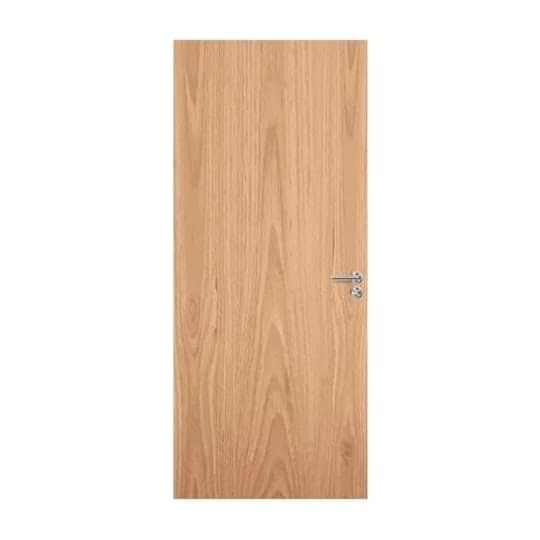
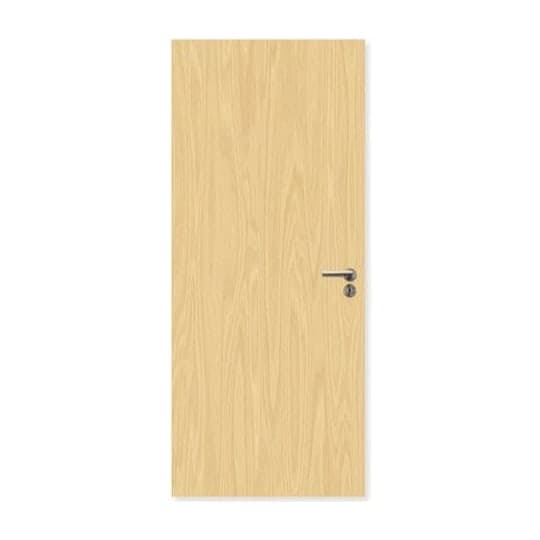
Fire doors for this job
Read next
About the author
Fire Door Range team
We supply certified FD30 and FD60 fire doors to landlords, contractors and housing providers across the UK. Every door is third-party tested to BS 476 Part 22 and BS EN 1634-1 with full Declarations of Performance, and our sister company C&C Fire Prevention Ltd handles FIRAS / BM TRADA certified installation. We write about the standards, regulations and practical decisions that shape day-to-day fire door specification — to help you get the right doors, fitted correctly, first time.
Looking for Fire Doors?
Browse our certified range of FD30 and FD60 fire doors.