 Prestige Awards 2025/26 Winner
Understanding Fire Door Ratings: 20-Minute to 3-Hour Protection
 Fire Door Range team·5 min read
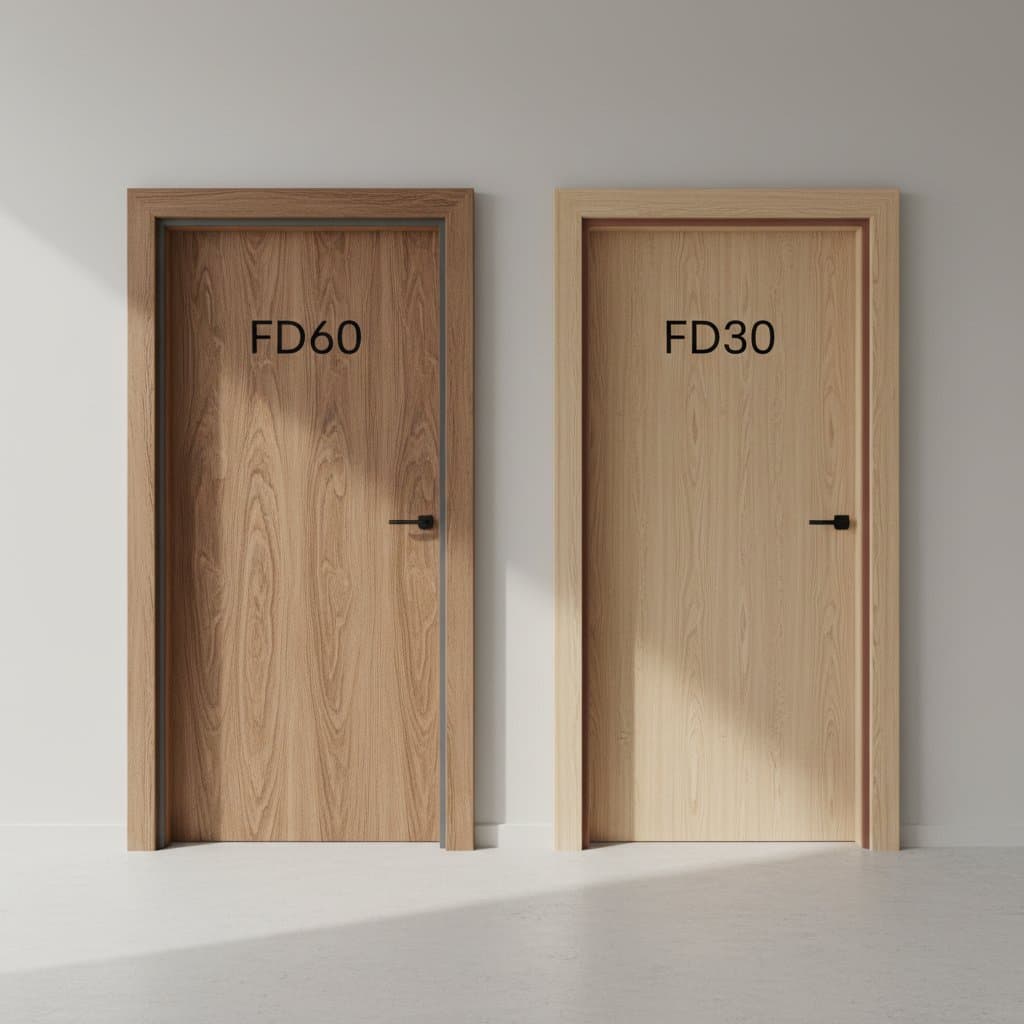
In the UK, fire doors are classified by the number of minutes they can resist fire in a standard test. The "FD" prefix stands for "fire door," and the number that follows indicates the integrity period in minutes. FD30 doors provide 30 minutes of protection and are the most commonly specified rating for internal doors in residential and commercial buildings. FD60 doors offer 60 minutes and are required in higher-risk locations such as stairwell enclosures, lift lobbies, and certain industrial applications. FD90 and FD120 doors exist for specialist use in buildings with extended evacuation requirements.
The fire rating is determined through testing to BS 476 Part 22 or the European standard BS EN 1634-1. During the test, a door assembly (including frame, seals, and hardware) is exposed to a furnace that follows a standardised time-temperature curve. The door must maintain its integrity — meaning no flames or hot gases pass through — for the stated period. Some doors are also tested for insulation, indicated by an additional suffix, though integrity-only ratings are more common in the UK market.
Selecting the correct rating depends on the building's use, size, and the location of the door within the fire strategy. Approved Document B of the Building Regulations provides detailed guidance, but as a general rule: flat entrance doors require FD30S (with smoke seals), doors to protected stairways in buildings over 11 metres require FD60, and doors in hospital and care home corridors may need FD30 or FD60 depending on the ward layout. Always consult the building's fire strategy or a fire engineer when specifying fire door ratings.
FAQ
Frequently asked questions
What does the FD number actually mean?
The number after FD is the minimum time in minutes that the door leaf has held back fire during a furnace test, so an FD30 resists fire for at least 30 minutes and an FD60 for at least 60 minutes. Doors are tested to either BS 476-22 or the European standard BS EN 1634-1, and common ratings run from FD30 through FD60, FD90 and FD120 (two hours).
What does the 'S' mean in FD30S or FD60S?
The 'S' confirms the door has been tested to restrict the spread of cold smoke as well as flames, usually achieved with combined intumescent and smoke seals. Most residential flat entrance and corridor doors are specified as FD30S or FD60S because smoke, not flame, is the main early threat to escape routes.
Do I need an FD30 or an FD60 fire door?
FD30 is the typical minimum for flat entrance doors and many internal doors in lower-rise residential buildings, while FD60 is specified where greater compartmentation is needed, often in taller or higher-risk buildings. The correct rating for any specific door should be confirmed by a competent fire risk assessor or against the building's fire strategy rather than assumed.
How often must fire doors be checked under UK law?
Under the Fire Safety (England) Regulations 2022, in residential buildings over 11 metres tall the responsible person must check communal fire doors at least quarterly and flat entrance doors at least annually. These duties have applied since the regulations came into force on 23 January 2023, alongside a requirement to give residents information about fire doors.
Does the fire rating still apply once the door is installed?
Only if it is installed and maintained correctly, because a door tested to BS 476-22 or BS EN 1634-1 relies on the right frame, intumescent seals, hinges, closer and gaps to perform. BS 8214 recommends a gap of around 3mm (within roughly a 2 to 4mm tolerance) around the leaf, and the rating is verified by a third-party certification label, such as BWF Fire Door Alliance, Certifire or BM TRADA Q-Mark, usually found on the top edge of the leaf or in the frame.
Related products
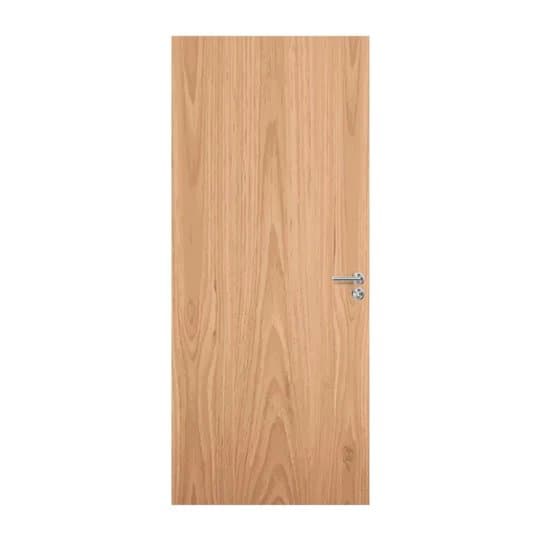
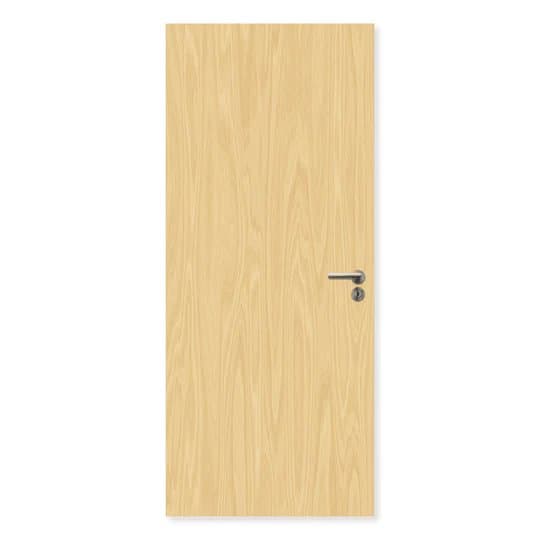
Doors mentioned in this article
Read next
About the author
Fire Door Range team
We supply certified FD30 and FD60 fire doors to landlords, contractors and housing providers across the UK. Every door is tested to BS 476 Part 22 with full Declarations of Performance, and our sister company C&C Fire Prevention Ltd handles FIRAS / BM TRADA certified installation. We write about the standards, regulations and practical decisions that shape day-to-day fire door specification — to help you get the right doors, fitted correctly, first time.
Looking for Fire Doors?
Browse our certified range of FD30 and FD60 fire doors.