 Prestige Awards 2025/26 Winner
FD30 vs FD60: Which Fire Door Rating Do You Actually Need?
 Fire Door Range team·10 min read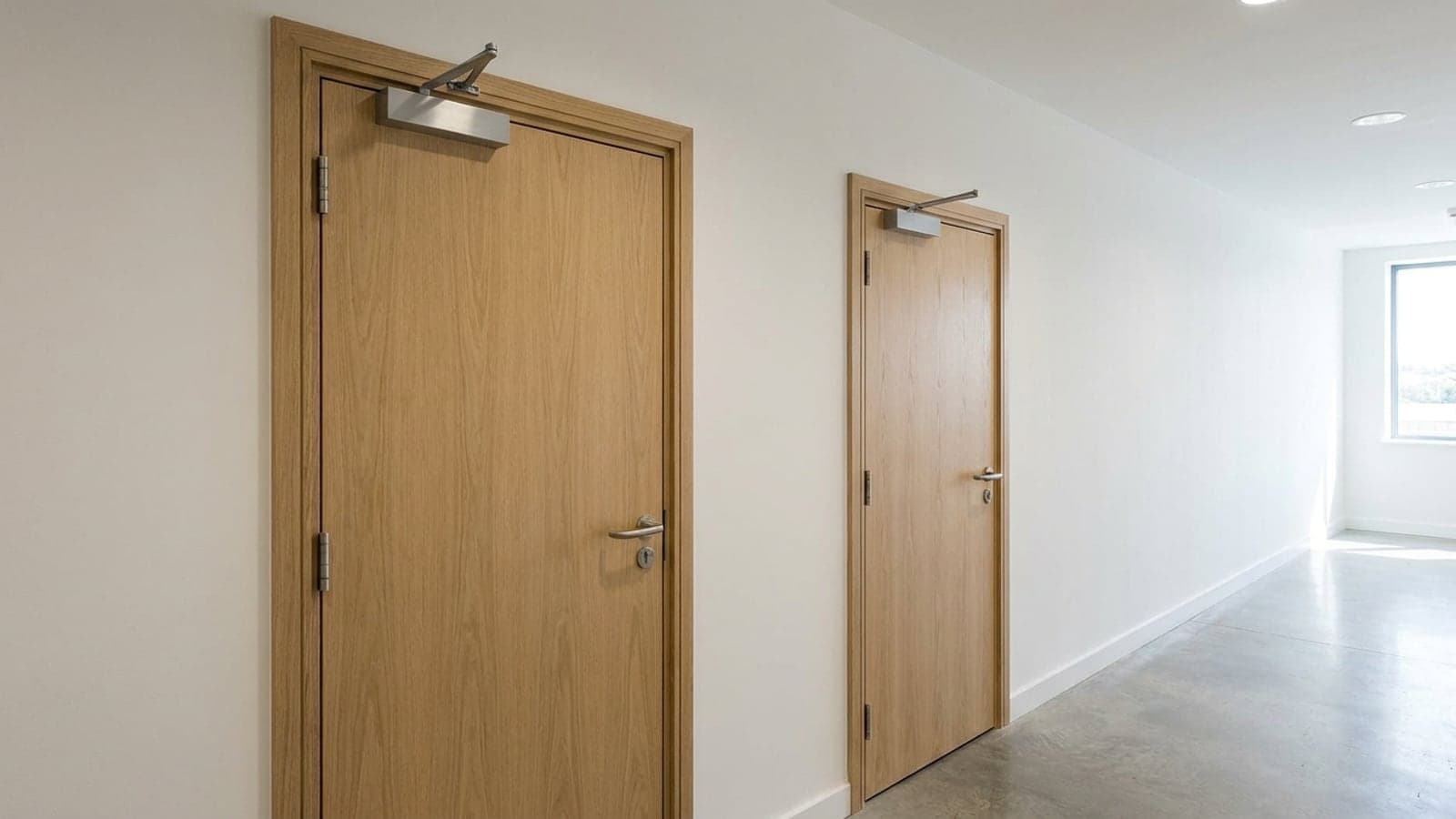
Specifying a fire door sounds straightforward until you are standing in front of a drawing package, a fire strategy report, and a quote from the supplier, and the question becomes concrete: FD30 or FD60? The decision carries real cost implications, real programme implications, and, more importantly, real consequences for life safety and regulatory compliance. Get it wrong in the over-specified direction and you waste budget and lead time. Get it wrong in the under-specified direction and you are exposed under the Regulatory Reform (Fire Safety) Order 2005 and, for higher-risk buildings, the Building Safety Act 2022. This guide sets out how the two ratings differ, where each one belongs, and how to make the call when the answer is not obvious.
What the ratings actually mean
The numbers in FD30 and FD60 refer to minutes of fire resistance demonstrated under a standardised test. A doorset rated FD30 has been shown to resist the passage of fire for at least 30 minutes, and an FD60 doorset for at least 60 minutes, when subjected to the heating regime defined in either BS 476 Part 22 (the long-standing British standard) or BS EN 1634-1 (the harmonised European standard now widely adopted across the UK supply chain). Both standards measure the same fundamental property, but the European test is generally regarded as more onerous and is increasingly the reference point for modern specifications.
The rating specifically concerns integrity, which is the door's ability to prevent flames and hot gases passing from the fire side to the non-fire side. Integrity is distinct from insulation, which measures whether the non-fire face of the door stays cool enough to prevent ignition of materials on the safe side. A door labelled FD30 or FD60 has been tested for integrity only; a door tested for both properties would carry a designation such as EI30 or EI60 under the European system. For the vast majority of internal compartmentation in UK buildings, integrity alone is what the fire strategy calls for.
You will also see the suffix "S" appended to many ratings, giving FD30S or FD60S. The S denotes that the doorset is fitted with cold smoke seals, typically combined intumescent and brush seals around the perimeter, to restrict the movement of smoke at ambient temperatures during the early stages of a fire. Smoke kills far more people in building fires than flames do, and the S suffix is mandatory in many of the locations where fire doors are used in practice, particularly on flat entrance doors and doors onto protected escape routes.
When FD30 is the right choice
For most UK projects, FD30S is the correct specification, and the guidance flows from Approved Document B of the Building Regulations. In residential blocks of flats where the top storey is no more than 11 metres above ground level, flat entrance doors opening onto a common escape route are required to be FD30S. The same 30-minute rating covers the majority of internal compartment doors in low and medium-rise housing, small offices, retail units, and light commercial premises where the compartmentation strategy is built around 30 minutes of fire resistance between rooms or between a room and a protected corridor.
There are practical reasons the standard lands at 30 minutes for so many applications. An FD30 doorset is lighter than its 60-minute counterpart, which means less strain on hinges and frames, easier self-closing action, and a door that occupants are more likely to actually keep shut rather than wedging open. It is cheaper to manufacture, cheaper to install, and generally quicker to source. For a landlord refurbishing a portfolio of flats or a contractor fitting out a suite of offices, the cost and weight advantages of FD30 fire doors are not trivial, and over-specifying to FD60 where the fire strategy does not demand it is simply waste.
The key word is "where the fire strategy does not demand it". Approved Document B sets a baseline, but the fire strategy for any specific building may call for something more onerous based on the layout, the occupancy, the travel distances, or the compartmentation philosophy. FD30 is the right answer when the regulations and the strategy both point to 30 minutes, not by default.
When FD60 is required
FD60 enters the picture when the consequences of failure are more severe, typically because evacuation takes longer or because the compartment protects something critical. In residential buildings taller than 11 metres, the protected stairwell and the doors serving it are commonly specified to 60 minutes, reflecting the fact that occupants above that height take measurably longer to escape and that firefighters need a defensible route up. Lift lobbies in taller buildings, doors onto firefighting shafts, and doors between residential compartments and ancillary areas such as bin stores or plant rooms frequently demand FD60 for the same reason.
Commercial kitchens, plant rooms housing boilers or generators, electrical switchrooms, and areas storing flammable materials are standard FD60 territory because the fire load inside those rooms is high and the probability of ignition is elevated. Care homes, hospitals, and other buildings with dependent occupants sometimes specify FD60 on compartment lines even where the height alone would not require it, because horizontal progressive evacuation relies on compartments holding long enough for staff to move residents from the affected zone to an adjacent one. In higher-risk buildings as defined under the Building Safety Act 2022, the Accountable Person has a direct legal interest in ensuring that compartmentation doors perform as the fire strategy claims they will, and FD60 fire doors are frequently the means by which that performance is delivered.
The guiding principle is compartmentation severity. If the door is holding the line between a source of high fire load and a route that must remain tenable long enough for phased or delayed evacuation, 60 minutes is the sensible floor.
The grey areas and how to decide
In practice, a great many decisions fall between the clean cases above, and this is where the fire strategy document earns its keep. On projects where no formal strategy has been produced, or where the strategy is silent on a particular door, the default should be to engage a competent fire engineer rather than guess. Insurance policies sometimes stipulate a higher rating than Building Regulations require, particularly for commercial premises with significant stock value or business interruption exposure, and those stipulations are binding on the policyholder regardless of what Approved Document B says.
Client and landlord preference also plays a part. Some clients instruct their design teams to over-specify to FD60 as a matter of policy, reasoning that the marginal cost is worth the reduced liability and the simpler compliance story later in the building's life. That is a defensible position, but it should be a conscious decision rather than a drift. The cost delta is not negligible: an FD60 doorset is typically 30 to 60 per cent more expensive than the equivalent FD30, and lead times on certified 60-minute assemblies can be longer, particularly for non-standard sizes or vision panel configurations.
When weighing the decision, work through the same questions a fire engineer would ask. What does Approved Document B require for this building type and height? What does the project's fire strategy say? Is the door on a protected escape route, a compartment line, or an ancillary opening? What is the fire load on either side? Does the insurer have a view? If the answers to those questions do not converge on a clear 30 or 60, escalate the query in writing and get a specialist to sign off.
The practical answer for most UK projects is that FD30S is the correct specification, with FD60S reserved for the locations where the fire strategy, Approved Document B, or a specific insurance or regulatory requirement demands it. Upgrading every door to 60 minutes is rarely good value and rarely necessary, but under-specifying is a route to enforcement action, invalid insurance, and, in the worst case, loss of life. If you are uncertain about what your project needs, send us the drawings and the fire strategy extract and request a quotation; we will specify the correct rating, the correct seals, and the correct hardware package, and give you a straight answer on lead time and cost before you commit.
Beyond FD60: FD90, FD120 and the full ratings range
FD30 and FD60 cover the overwhelming majority of UK work, but the rating scale runs further in both directions and it helps to know where the two common ratings sit within it. The "FD" prefix simply means fire door, and the number is the integrity period in minutes demonstrated under test. FD20 appears occasionally on older specifications and imported products but is largely obsolete in the UK. FD30 and FD60 are the everyday ratings. FD90 and FD120 — 90 minutes and two hours — exist for specialist situations: plant rooms, substations, sprinkler and tank rooms, high fire-load storage, and compartment lines in buildings with extended evacuation strategies such as hospitals. Ratings above two hours are rare in timber and generally move into steel doorsets.
Two points catch people out at the top of the range. First, availability: certified timber FD90 and FD120 assemblies are a specialist product with longer lead times and a much narrower range of permitted sizes, glazing and ironmongery than FD30 — you cannot assume a detail that works at 30 minutes scales up. Second, and more important, integrity is not insulation. A UK fire door rating is normally an integrity-only figure, meaning the door holds back flames and hot gases for the stated period; it does not promise that the unexposed face stays cool enough to touch. Where the fire strategy demands insulation as well, that is specified separately — under the European classification you will see it written as EI (integrity plus insulation) rather than E (integrity alone), so an EI60 doorset is a materially different and more expensive product from an FD60. If a specification says EI, do not quote an integrity-only door against it.
Integrity, insulation and the two test standards
UK fire doors are tested to either BS 476-22 (the long-standing British method, which produces the familiar FD30/FD60 notation) or BS EN 1634-1 (the European method, which produces E30/EI60-style classifications). Both are accepted, and most certified UK timber doorsets carry evidence to one or the other. The practical consequence for a specifier is simply that you should compare like with like: an FD60 to BS 476-22 and an E60 to BS EN 1634-1 are broadly equivalent on integrity, but an EI60 adds an insulation requirement that neither of the others makes. When you receive a Declaration of Performance, check which standard it cites before concluding that two quotes are for the same product.
FAQ
Frequently asked questions
What does the FD number on a fire door mean?
FD stands for fire door, and the number is the integrity period in minutes the door achieved under test — so an FD30 resists fire for at least 30 minutes and an FD60 for at least 60. Doors are tested to BS 476-22 or the European standard BS EN 1634-1, and the UK range runs from FD30 through FD60, FD90 and FD120.
What does the S mean in FD30S and FD60S?
The S confirms the door was also tested to restrict the spread of cold smoke, not just flame, which is achieved with combined intumescent and smoke seals. Most flat entrance doors and corridor doors on escape routes are specified as FD30S or FD60S, because smoke rather than flame is the main early threat to people escaping.
Do I need FD30 or FD60 fire doors?
FD30 is the typical minimum for flat entrance doors and internal doors in lower-rise residential and commercial buildings, while FD60 is specified where greater compartmentation is needed — commonly protected stairways in taller buildings, compartment lines, and higher-risk rooms. The correct rating for any individual door should come from the building fire strategy or a competent fire risk assessor rather than being assumed.
What is the difference between an FD60 and an EI60 door?
FD60 is an integrity rating: the door holds back flames and hot gases for 60 minutes. EI60 adds an insulation requirement, meaning the unexposed face must also stay below defined temperature limits. EI-rated doorsets are a different and more expensive product, so if a specification calls for EI you should not quote an integrity-only fire door against it.
Does a fire door keep its rating after installation?
Only if it is installed and maintained as tested. The rating belongs to the whole assembly — leaf, frame, intumescent and smoke seals, hinges, closer and any glazing — so substituting components, over-trimming the leaf, or leaving gaps outside the 2 to 4mm tolerance in BS 8214 can void it. Third-party certification labelling and the manufacturer fitting instructions are what evidence the rating in practice.
Related products
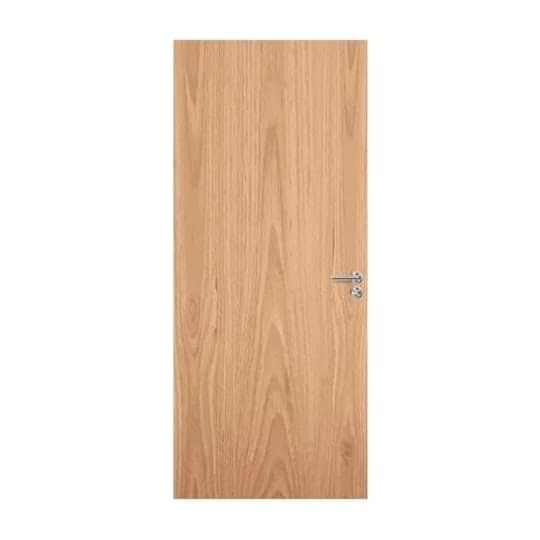
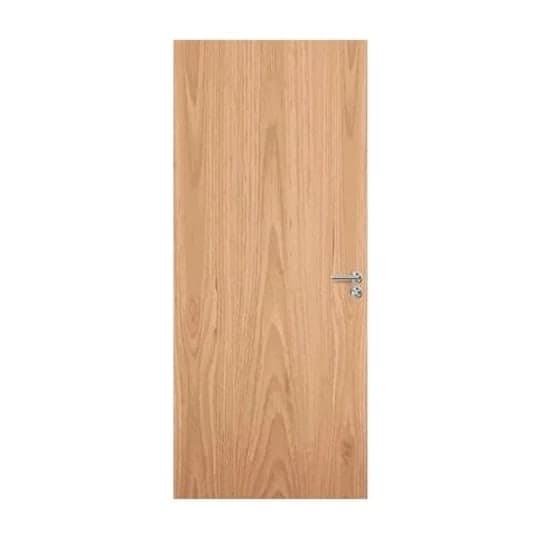
Fire doors for this job
Read next
About the author
Fire Door Range team
We supply certified FD30 and FD60 fire doors to landlords, contractors and housing providers across the UK. Every door is third-party tested to BS 476 Part 22 and BS EN 1634-1 with full Declarations of Performance, and our sister company C&C Fire Prevention Ltd handles FIRAS / BM TRADA certified installation. We write about the standards, regulations and practical decisions that shape day-to-day fire door specification — to help you get the right doors, fitted correctly, first time.
Looking for Fire Doors?
Browse our certified range of FD30 and FD60 fire doors.