 Prestige Awards 2025/26 Winner
CQC · RRO 2005 · BS 9999
Care Homes
Fire doors for care homes
Care homes carry one of the highest fire-safety duties of any building type. Residents are often less mobile, may have cognitive impairment, and depend on compartmentation to give staff time to evacuate the building safely. Fire doors in care homes are inspected closely by the Care Quality Commission (CQC) and by local fire and rescue authorities. They must form part of a documented fire strategy, be specified to the right rating, and be maintained on a clear inspection schedule.
Recommended specification: FD30
For most care-home corridors and bedrooms, FD30S is the correct specification with smoke seals on every door. Upgrade to FD60S at stairwell enclosures, lift lobbies, and any building above 11 metres. Keep a documented inspection log — quarterly checks on communal fire doors are recommended best practice for CQC-registered homes.
Why compartmentation carries more weight in a care home
Unlike offices or shops, the people inside a care home are frequently frail, mobility-impaired, cognitively vulnerable, or entirely dependent on staff for movement, and the building's fire strategy usually assumes most residents will not self-evacuate in the first few minutes of an alarm. That leads to progressive horizontal evacuation, where residents are moved sideways through fire-resisting compartments rather than immediately out of the building, and in some cases to a stay-put posture within a sufficiently protected room.
Every one of those strategies depends on compartmentation holding, which in turn depends on fire doors performing exactly as specified, every time, for the full duration claimed. Get the doors wrong and the evacuation plan collapses with them.
The regulatory picture
The legal backbone for fire safety in any English care home is the Regulatory Reform (Fire Safety) Order 2005, which places the responsible person under a duty to carry out and maintain a suitable and sufficient fire risk assessment. That duty has been sharpened by the Fire Safety Act 2021 and the subsequent Fire Safety (England) Regulations 2022, which tightened expectations around structural fire protection and the information held about it.
Layered on top, the CQC Fundamental Standards require registered providers to meet Regulation 15 (Premises and equipment), meaning the building must be suitable and properly maintained, and Regulation 12 (Safe care and treatment), which explicitly covers assessing and mitigating risks to residents. Healthcare-specific guidance comes from HTM 05-02 Firecode, the Department of Health and Social Care document that sets out fire safety design principles for residential care premises.
The Care Quality Commission does not enforce fire safety legislation directly — that sits with the local fire and rescue authority under the Fire Safety Order. The CQC assesses whether a provider is meeting its fundamental standards, and in practice that is a question of evidence: can the registered manager produce a current fire risk assessment, a fire strategy, fire door inspection records, staff training logs and a clear remedial-action trail? Where that evidence is missing, the Safe domain can be rated inadequate and serious concerns referred on for enforcement.
The practical requirements reduce to three things: a competent, up-to-date fire risk assessment that explicitly covers compartmentation and fire doors; a documented inspection and maintenance regime, and our fire door inspection checklist sets out what good looks like; and traceable certification for every door so the paperwork stands up under scrutiny, which our guide to certification schemes explains.
Specification, and the clear opening width problem
The minimum practical specification for a care home bedroom door is FD30S — thirty minutes of integrity together with cold smoke seals — and this is generally non-negotiable, because smoke rather than flame is what kills residents in a compartmentation-based strategy. Stairwell enclosures, protected corridors forming the horizontal escape route, and any door separating sub-compartments identified in the fire strategy will often step up to FD60, particularly in two and three-storey homes or where travel distances are generous.
Our FD30 internal fire doors cover standard bedroom and ancillary room applications, while the FD60 internal range handles the heavier-duty compartment lines a fire engineer has flagged. All should be tested and certified to BS 476 Part 22 or BS EN 1634-1, and specifiers should insist on seeing certification for the full doorset assembly rather than the leaf in isolation.
Width matters almost as much as fire rating. A standard 838mm leaf does not give enough effective clear opening for a modern bariatric wheelchair, a hoist, or an evacuation sledge being manoeuvred by two staff under pressure, and HTM 05-02 pushes designers towards wider leaves of 926mm or 1000mm in most resident-facing applications. Because few stock doors come in those sizes with the correct rating and certification intact, care home refurbishments routinely need made-to-measure fire doors supplied as certified doorsets with the ironmongery holes pre-prepared. Lever handles should comply with BS EN 1906 at a grade appropriate to heavy-use public buildings, and hinges, closers and intumescent hardware must all sit within the same certification chain as the leaf.
What actually damages fire doors in care settings
Care homes are mechanically brutal environments. Wheelchairs, medication trolleys, laundry carts and hoists clip the edges of leaves dozens of times a day, chipping lippings, splitting them away from the core, and progressively destroying the intumescent seal housings.
The single biggest compliance failure, though, is staff wedging fire doors open for convenience — to move a resident, air a corridor, or simply because a closer has been set too heavy. This is unlawful under the Fire Safety Order and it disables the compartmentation the strategy relies on. The correct engineering answer is electromagnetic hold-open devices certified to BS EN 1155 and wired into the fire alarm, so doors release automatically on activation.
Residents living with dementia add another layer: hardware can be picked at, closers tampered with, and unfamiliar ironmongery is confusing, which argues for simple, robust, anti-ligature-aware lever sets rather than novelty hardware. The cleaning regime is a slower-acting threat — aggressive quaternary ammonium and chlorine-based cleaners degrade intumescent and smoke seals over time, and staff should be told not to saturate seal lines when wiping doors down.
Inspection, records and common enforcement findings
BS 8214:2016 is the code of practice for installing and maintaining timber-based fire door assemblies, and it is the document most surveyors reach for. Six-monthly inspection is the minimum reasonable interval for a care home given the intensity of use, and many operators inspect quarterly, or monthly on high-traffic doors. Inspections should cover gap tolerances at head and jambs, threshold gaps, seal condition, hinge security, closer performance, glazing integrity, and any unauthorised modification such as drilled-through cable runs or surface-fixed door viewers that breach the leaf.
Documentation is no longer optional paperwork. The Building Safety Act 2022 introduced the golden thread of building information, and although the strict duties apply to higher-risk buildings, the cultural shift has spread across the sector and inspectors now expect traceable records. A defensible file contains the fire strategy, the current fire risk assessment, original doorset certification for every door, inspection records with photographs, remedial action logs, and training records for staff carrying out visual checks.
Common findings in enforcement notices include missing or painted-over intumescent seals, gaps exceeding 4mm at the leaf edge, uncertificated replacement hardware fitted during minor works, doors wedged open with no hold-open device, and fire doors hung the wrong way relative to the direction of fire spread.
Fire doors suitable for care homes
Certified to BS 476 Part 22 · full documentation supplied · 2-3 week lead time
FD30 · Internal
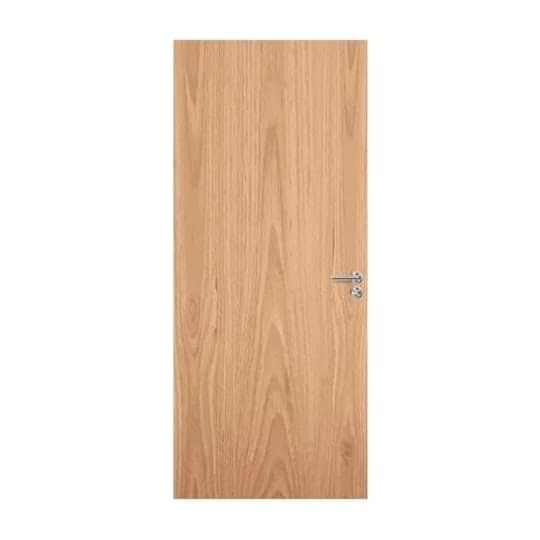
Internal Flush FD30
£185.00 – £420.00ex. VAT
5 sizes available
FD30 · Internal
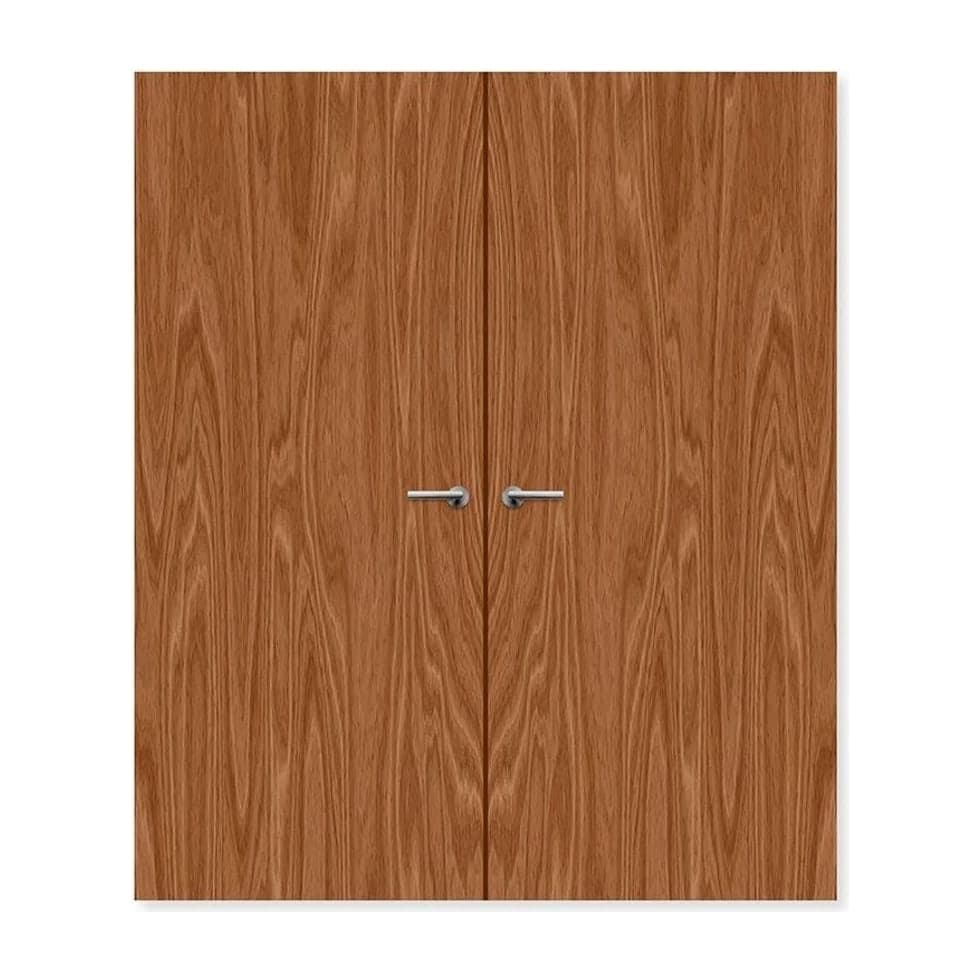
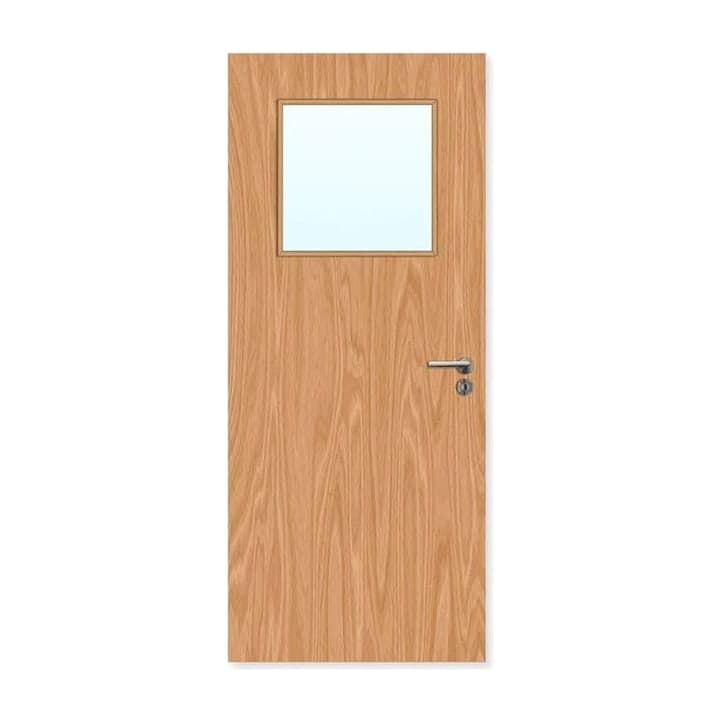
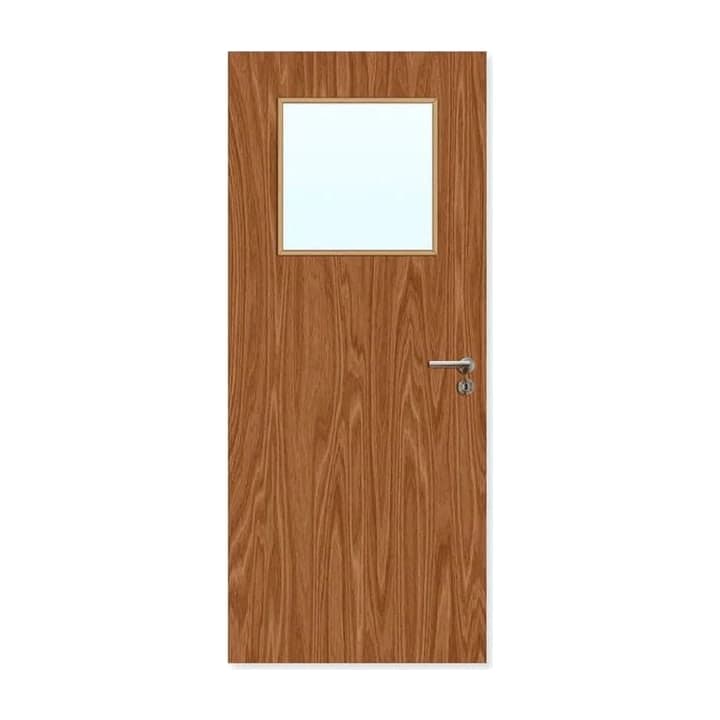
Internal Flush Double FD30
£385.00 – £795.00ex. VAT
4 sizes available
FD30 · Internal
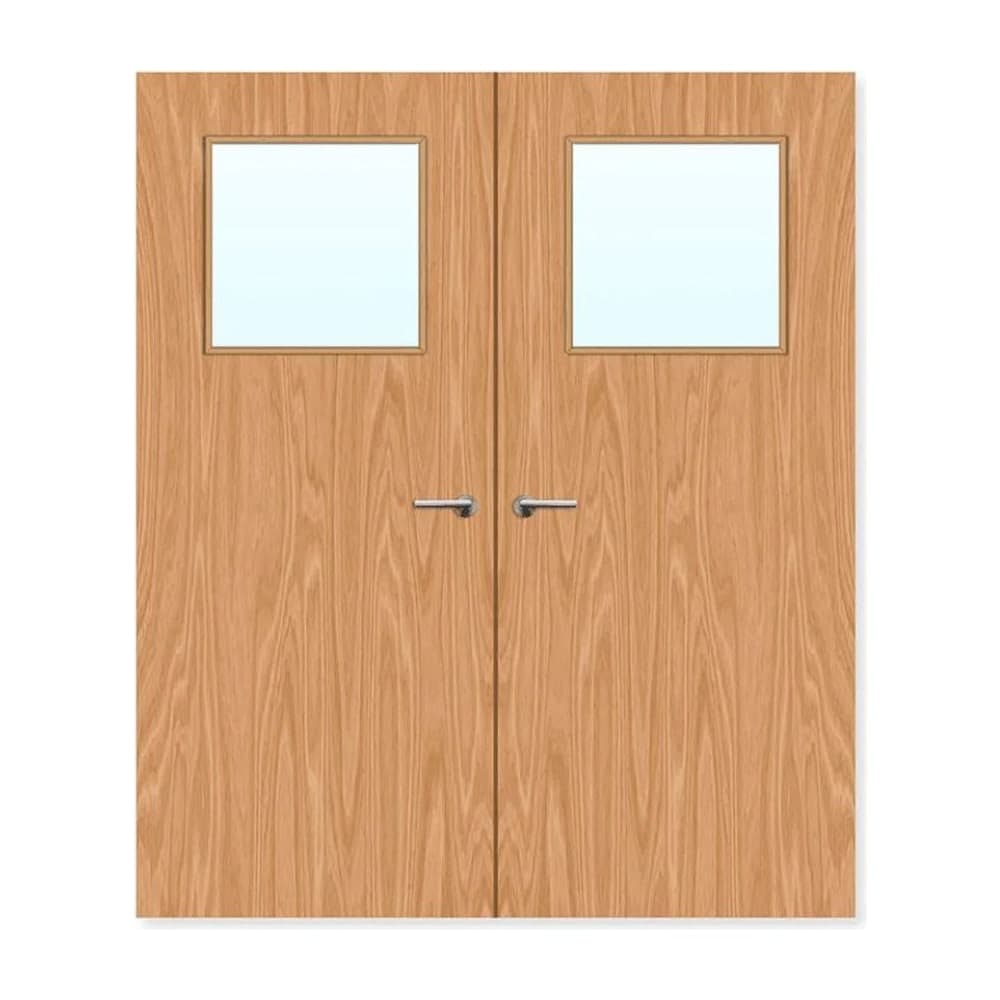
1G Internal Glazed FD30
£365.00 – £640.00ex. VAT
5 sizes available
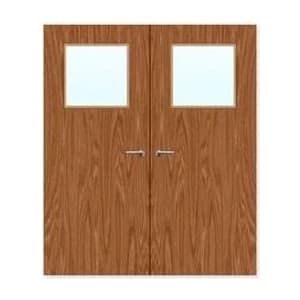
FD30 · Internal
1G Internal Glazed Double FD30
£718.00 – £1158.00ex. VAT
4 sizes available
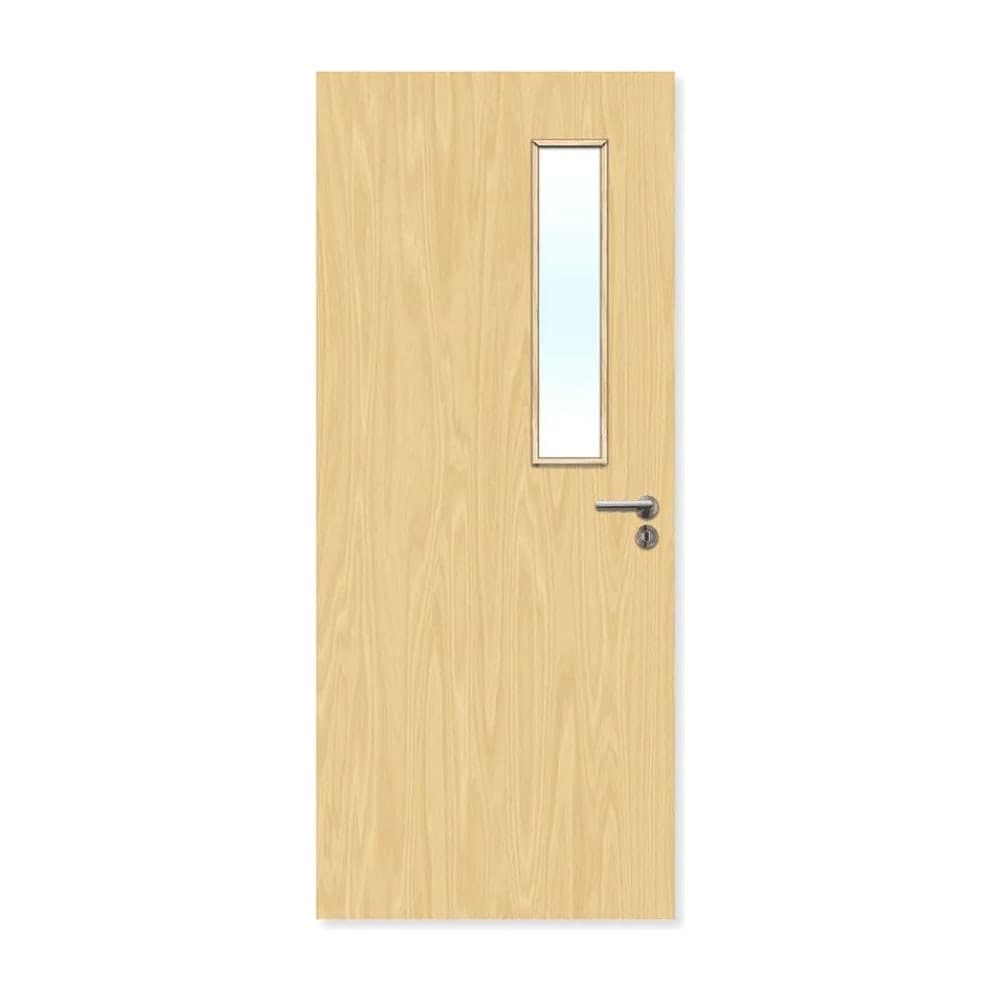
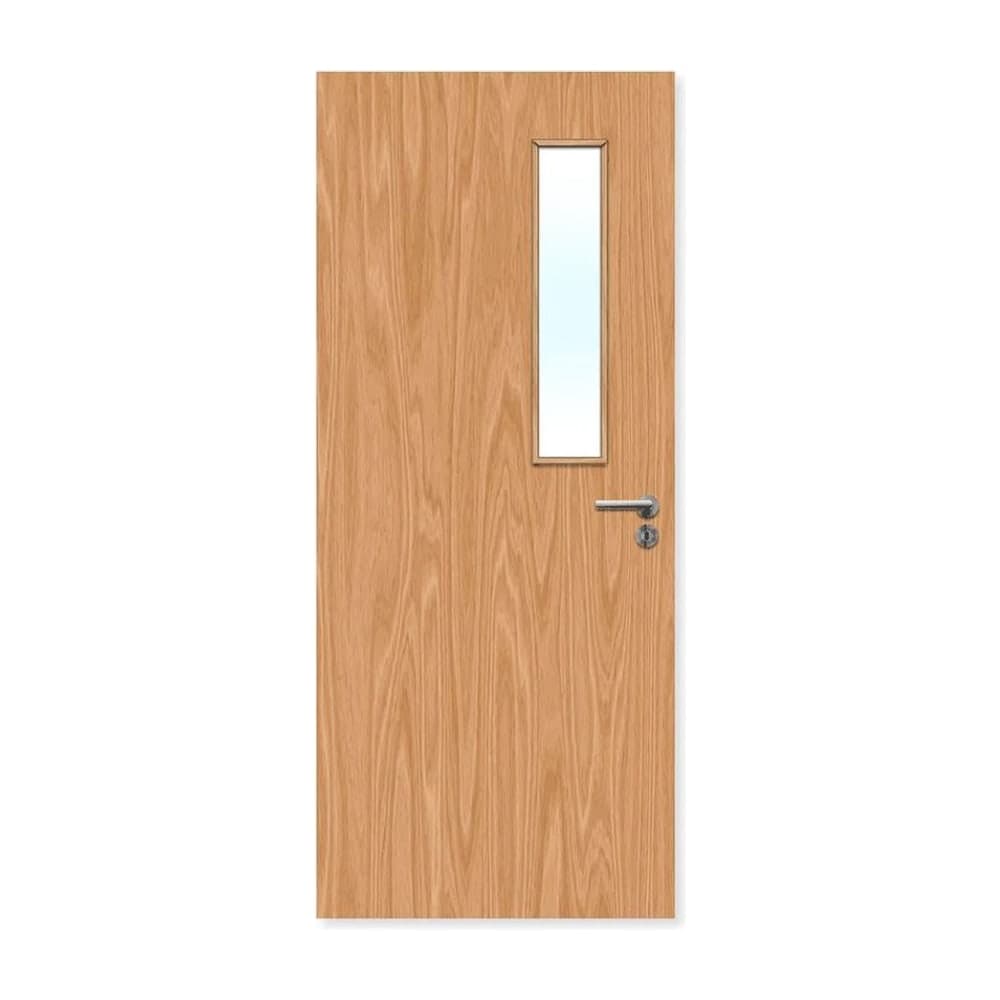
FD30 · Internal
3G Internal Glazed FD30
£395.00 – £640.00ex. VAT
5 sizes available
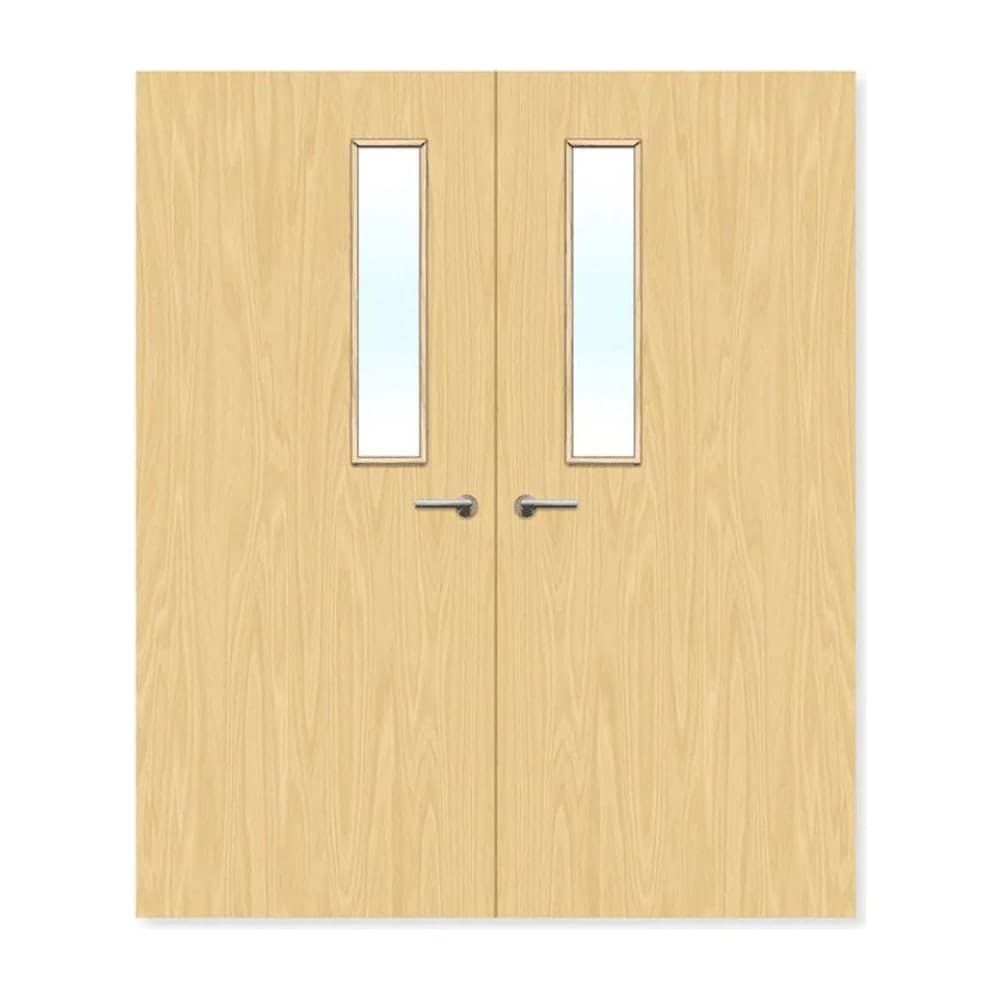
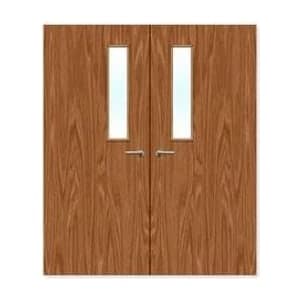
FD30 · Internal
3G Internal Glazed Double FD30
£718.00 – £1158.00ex. VAT
4 sizes available
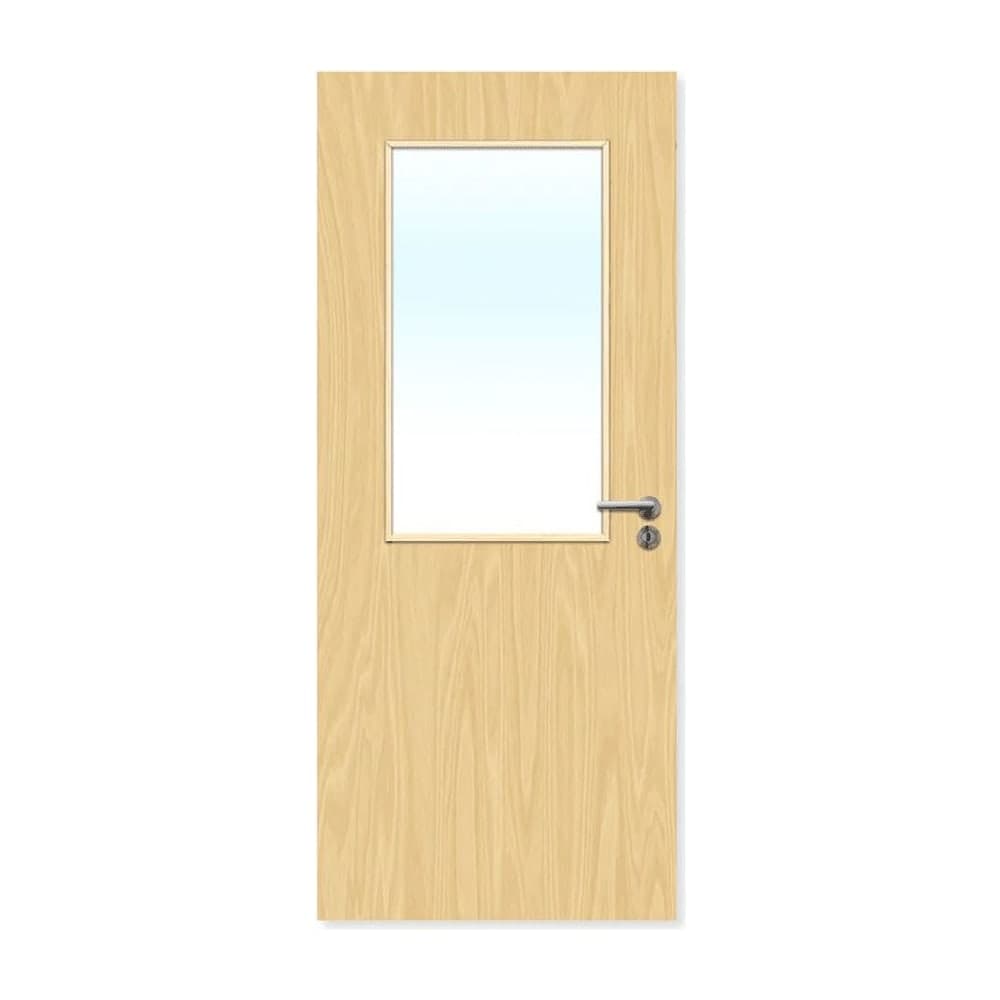
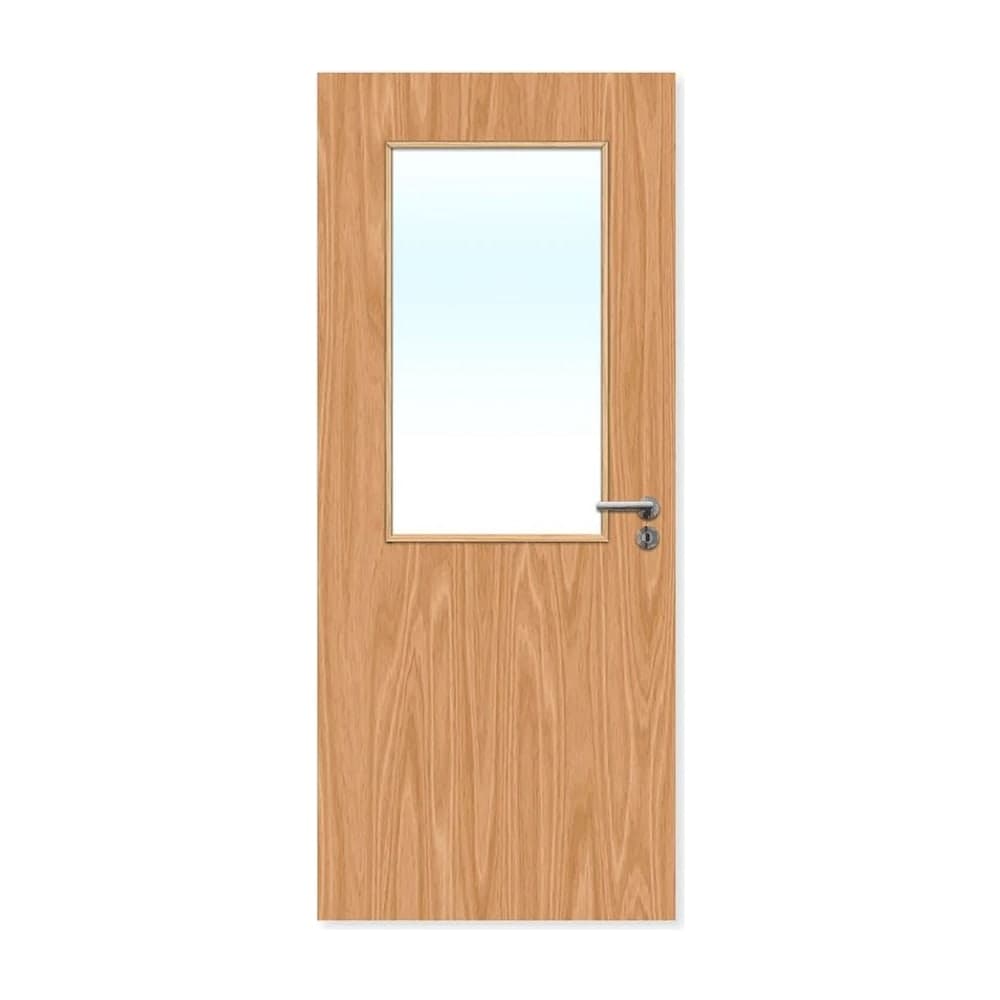
FD30 · Internal
8G Internal Glazed FD30
£395.00 – £680.00ex. VAT
5 sizes available
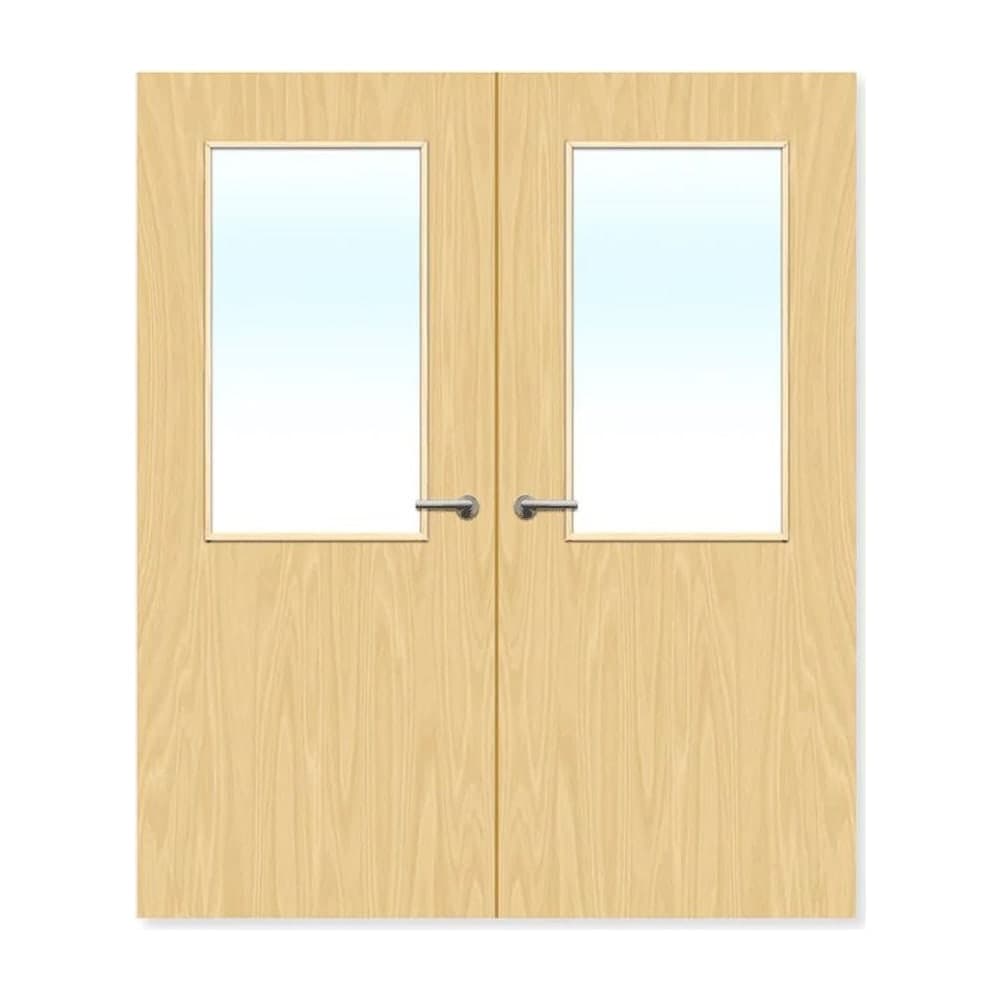
FD30 · Internal
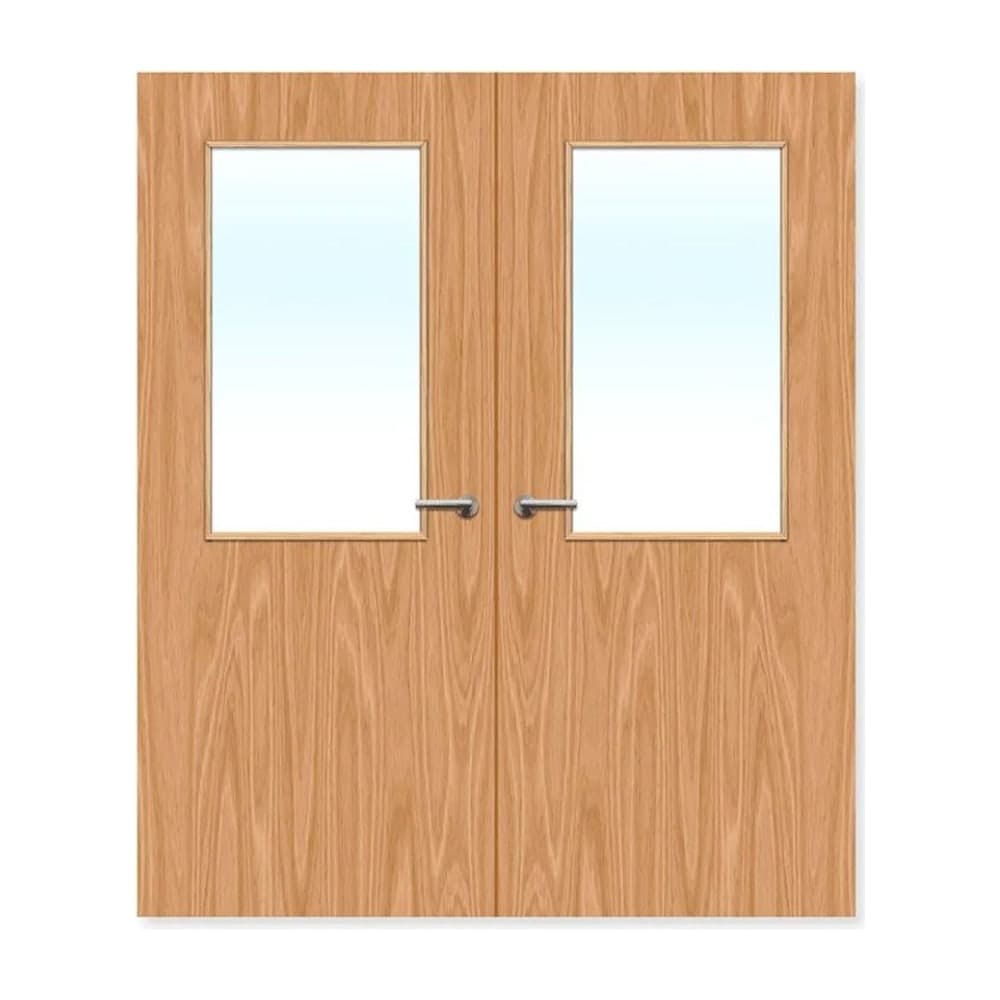
8G Internal Glazed Double FD30
£750.00 – £1235.00ex. VAT
4 sizes available
FAQ
Fire doors for care homes — common questions
What fire door rating is required in a care home?
FD30S as a minimum at every bedroom door and habitable room entrance, with smoke seals. FD60S is needed at doors onto protected stairways and in care homes above 11 metres. The "S" denotes smoke seals, which are mandatory in care homes because cold-smoke inhalation is one of the larger fatality risks in this setting.
How often does the CQC inspect fire doors?
The CQC does not inspect fire doors directly, but its KLOEs (Key Lines of Enquiry) under the "Safe" domain explicitly check whether the registered manager is maintaining fire safety in line with the Regulatory Reform (Fire Safety) Order 2005. In practice, this means a documented fire door inspection programme — quarterly checks on communal fire doors are recommended best practice. The local fire and rescue authority can carry out audits separately at any time.
Are hold-open devices allowed on care-home fire doors?
Only certified hold-open devices that release automatically on fire alarm activation. Door wedges, hooks, and any manual hold-open device are never acceptable. The hold-open device must be tested to BS 7273-4 and connected to the building's fire detection system so that all doors close simultaneously when the alarm sounds.
Can fire doors in care homes have glazing?
Yes — pyro-resistant glazed fire doors are common in care-home corridors because they allow staff to see into bedrooms without opening the door. The glazing must be part of the manufacturer's tested assembly. FD30S glazed doors are widely available; FD60S glazed doors are more restricted on maximum panel size, so check the test evidence before specifying.
What are the CQC's fire safety requirements for care homes?
The CQC does not enforce fire safety law directly, but it inspects whether a registered provider meets its fundamental standards — principally Regulation 12 (Safe care and treatment) and Regulation 15 (Premises and equipment). In fire-safety terms that means: a current, competent fire risk assessment that explicitly covers compartmentation and fire doors; a documented fire door inspection and maintenance regime; traceable certification for every fire door with a clear remedial-action trail; and trained staff carrying out routine visual checks. Missing or out-of-date evidence can lead to the "Safe" domain being rated inadequate.
What is a CQC fire safety assessment?
When CQC inspectors look at fire safety they assess evidence rather than carrying out a technical fire-door survey themselves. A CQC fire assessment checks that the registered manager can produce a current fire risk assessment, a fire strategy, fire door inspection records, staff fire-training logs and a remedial-action trail, and that fire safety is being managed in line with the Regulatory Reform (Fire Safety) Order 2005. The technical inspection of the doors should be carried out separately by a competent inspector under BS 8214.
Who enforces fire safety in care homes?
Fire safety law in care homes is enforced by the local fire and rescue authority under the Regulatory Reform (Fire Safety) Order 2005, which can issue enforcement or prohibition notices and prosecute serious breaches. The CQC separately assesses fire safety as part of a provider meeting its fundamental standards, and the two bodies share concerns, so a fire door failing on one front usually surfaces on the other.
How often should care home fire doors be inspected?
BS 8214 recommends at least six-monthly inspections, but given the intensity of use in a care home many operators inspect quarterly, or monthly for high-traffic doors. Wheelchairs, trolleys and hoists damage leaves and seals quickly, so a frequent, documented inspection regime carried out by a competent person is the realistic minimum for a care setting.