 Prestige Awards 2025/26 Winner
Fire Door Inspections: What Surveyors Look For
 Fire Door Range team·7 min read
Fire door inspections are a routine part of fire risk assessments under the Regulatory Reform (Fire Safety) Order 2005 and are increasingly formalised under the Building Safety Act 2022. Whether the inspection is carried out by a fire risk assessor, a building surveyor, or a specialist fire door inspector (such as those certified by the BM TRADA Q-Mark or BWF Fire Door Alliance schemes), the process follows a consistent methodology. Understanding what inspectors look for allows building managers to identify and fix issues before the formal assessment.
The Inspection Process
A thorough fire door inspection begins before the inspector even touches the door. They will look at the door's certification label or plug — a small disc embedded in the top edge or hinge edge of the door that identifies the manufacturer, the fire rating, and the product reference. If this label is missing or illegible, the inspector cannot confirm the door's rating, which is an automatic fail in many assessment schemes. They will also check whether the door has a valid chain of certification — meaning the door, frame, seals, and hardware were all supplied and installed in accordance with the manufacturer's tested specification.
The physical inspection covers a standardised set of checkpoints. The inspector will measure the gaps around the head, jambs, and threshold using a feeler gauge or gap gauge, checking that they fall within the 2-4mm tolerance at the head and jambs and do not exceed 8-10mm at the threshold. They will examine the intumescent strips and smoke seals for continuity, damage, and paint contamination. They will test the self-closing device by opening the door to various angles and confirming that it latches fully each time. They will check the hinges — are there three? Are they the correct grade? Are all screws present and tight?
Common Fail Points
The most frequently identified defects during fire door inspections include gaps exceeding 4mm (particularly at the hinge side where hinge wear causes the door to drop), missing or damaged intumescent strips, closers that fail to latch the door, and the use of non-fire-rated hardware. Other common issues include unapproved modifications such as drilled holes, removed glazing beads, wedged-open doors, and the installation of non-fire-rated letter plates or viewers.
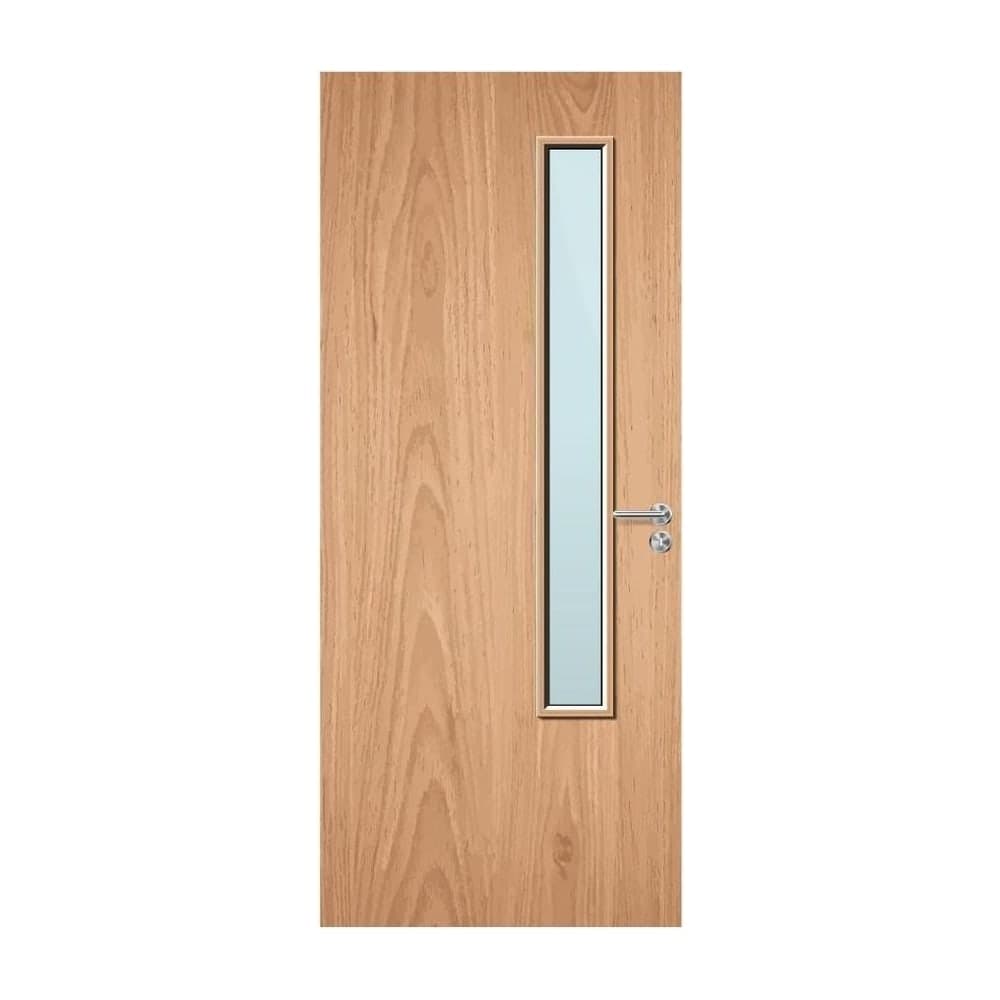
Glazed fire doors attract particular scrutiny. Inspectors check that the glass is fire-rated (wired, borosilicate, or intumescent-laminated), that the glazing beads are the correct fire-rated type, and that the intumescent gaskets between the glass and beads are intact. A glazed fire door with standard timber beading instead of fire-rated beading is one of the most serious defects an inspector can find — it renders the entire door non-compliant.
Preparing for an Inspection
The best preparation is ongoing maintenance. Implement a six-monthly inspection routine using a standardised checklist (see our separate article on this topic), fix defects promptly, and keep records of all maintenance and replacements. Before a formal inspection, walk the building and check every fire door yourself. Ensure all doors close and latch properly, all seals are intact, and no doors have been propped or wedged open. Having your records organised — certification documents, maintenance logs, replacement histories — demonstrates competence and can turn a potentially difficult inspection into a straightforward one.
FAQ
Frequently asked questions
How often do fire doors need to be inspected by law in the UK?
Under the Fire Safety (England) Regulations 2022, the responsible person for a multi-occupied residential building above 11 metres must check communal fire doors at least every three months, and use best endeavours to check flat entrance doors annually. Other premises are governed by the Regulatory Reform (Fire Safety) Order 2005, which requires fire doors to be kept in good working order as part of the fire risk assessment, with periodic inspections commonly carried out every six to twelve months depending on risk and use.
What gap should there be around a fire door, and how do surveyors measure it?
Surveyors typically expect a consistent gap of 2 to 4mm around the top and sides of the leaf, measured at several points down the jambs and across the head with a feeler gauge. The threshold gap is usually accepted up to about 8 to 10mm where there is no smoke requirement, but should be no more than 3mm (or fitted with a threshold seal) where the door must resist cold smoke.
Who is qualified to carry out a fire door inspection?
Routine visual checks can be done by trained building or facilities staff, but full surveys should be carried out by a competent person, typically someone holding a recognised qualification such as FDIS (the British Woodworking Federation's UKAS-accredited Fire Door Inspection Scheme), BM TRADA Q-Mark, IFC or FIRAS certification. The Fire Safety Order and 2022 Regulations require a 'competent person' but do not mandate one specific certificate, so evidence of relevant training and accreditation is the practical benchmark.
How can I tell if a door is a genuine certified FD30 or FD60 fire door?
Look for a third-party certification label or colour-coded plug, usually fitted to the top or hanging edge of the leaf, which shows the manufacturer, certification scheme (such as Certifire or BM TRADA Q-Mark) and the fire rating. The number indicates resistance in minutes, so FD30 is tested to provide 30 minutes and FD60 to provide 60 minutes of integrity under test to BS 476-22 or BS EN 1634-1; without traceable certification a surveyor cannot confirm the door is a compliant fire door.
What are the most common reasons fire doors fail an inspection?
The most frequent failures are excessive or uneven gaps around the leaf, missing, damaged or painted-over intumescent and smoke seals, self-closing devices that do not fully close and latch the door, incorrect or non-fire-rated hinges and hardware, and damage or unfilled holes in the leaf or frame. Surveyors also flag doors held open without an approved retaining device and any alterations that breach the manufacturer's certified specification.
Related products
Fire doors for this job
Read next

About the author
Fire Door Range team
We supply certified FD30 and FD60 fire doors to landlords, contractors and housing providers across the UK. Every door is third-party tested to BS 476 Part 22 and BS EN 1634-1 with full Declarations of Performance, and our sister company C&C Fire Prevention Ltd handles FIRAS / BM TRADA certified installation. We write about the standards, regulations and practical decisions that shape day-to-day fire door specification — to help you get the right doors, fitted correctly, first time.
Looking for Fire Doors?
Browse our certified range of FD30 and FD60 fire doors.