 Prestige Awards 2025/26 Winner
Fire Door Signage: Legal Requirements for UK Commercial Premises
 Fire Door Range team·8 min read
Fire door signs are among the most overlooked details in commercial property compliance, and also among the most frequently cited. They carry safety-critical information, they are a legal requirement under the Regulatory Reform (Fire Safety) Order 2005, and their absence (or their quiet disappearance behind a noticeboard) is one of the most common findings recorded in fire risk assessment reports across the UK. The signs themselves cost very little, yet they sit alongside closers, hinges and intumescent seals as part of the wider package of fire door ironmongery and accessories that turns a door leaf into a certified fire-resisting assembly. Getting the signage right is not optional, and it is not difficult once you understand what the law actually requires.
What the law says
The Regulatory Reform (Fire Safety) Order 2005 is the primary piece of legislation covering fire safety in non-domestic premises in England and Wales, with equivalent regimes in Scotland and Northern Ireland. It places a duty on the "Responsible Person" (typically the employer, occupier, or owner) to carry out a fire risk assessment and to provide appropriate safety signs and notices where they are needed to protect relevant persons. Signage is therefore not a decorative afterthought but a named obligation, enforceable by the local fire and rescue authority with powers ranging from enforcement notices to unlimited fines and custodial sentences in the worst cases.
The statutory basis for the appearance of those signs is the Health and Safety (Safety Signs and Signals) Regulations 1996, which implements the EU safety signs directive and is still in force post-Brexit. These regulations dictate the colour, shape and symbol conventions that most people recognise instinctively: red circles for prohibition, blue circles for mandatory action, green rectangles for safe condition and escape. Alongside the regulations sit the British Standards that tell you how to design and specify compliant signage in practice. BS 5499-4 covers the design principles for safety signs, BS 5499-5 deals specifically with fire safety signs and notices, and BS ISO 7010 is the internationally harmonised standard for graphical symbols and is now the recognised benchmark for new installations. Where signage must also serve disabled users, the Equality Act 2010 imposes a duty to make reasonable adjustments, which in practical terms means considering contrast, mounting height and tactile or photoluminescent options in higher-risk premises.
The essential fire door signs
Most commercial premises need only a small family of signs to be fully compliant, and each one has a specific purpose tied to how the door is intended to operate. Specifying the wrong message is almost as bad as having no sign at all, because it tells occupants and inspectors that the door is doing a job it was never designed to do. The four signs below cover the overwhelming majority of situations you will encounter in offices, retail units, hospitality venues, healthcare settings and residential blocks with commercial elements.
- "Fire door — keep shut" is the workhorse of the set and is fitted to both faces of any self-closing fire door that must remain in the closed position to perform its function. This covers almost every fire door in corridors, stairwells, and cross-corridor locations.
- "Fire door — keep locked" is fitted to fire doors protecting spaces that must be locked when not in use, such as plant rooms, electrical intake cupboards, service risers and storage rooms containing hazardous materials. It signals to users and inspectors that an unlocked door is itself a defect.
- "Automatic fire door — keep clear" is for fire doors fitted with electromagnetic hold-open devices that release automatically on activation of the fire alarm. The sign warns occupants not to wedge or obstruct the opening.
- "Fire exit" and "Fire exit — keep clear" signs use the green running man symbol to BS ISO 7010 and are mandatory along every designated escape route, with directional arrows where the route is not obvious.
Sign materials and durability
The choice of material is driven by location, traffic and the image the premises wants to project, not by any single legal requirement. Rigid PVC signs are the cheapest option and are perfectly adequate for low-traffic back-of-house areas where they will not be knocked, scuffed or cleaned aggressively. Self-adhesive vinyl is by far the most common specification in UK commercial premises because it is budget-friendly, quick to apply and easy to replace when it fades or lifts at the edges.
Photoluminescent signs absorb ambient light and glow in the dark for a sustained period after the lights fail, which makes them the obvious choice for escape routes in any premises where occupants may need to evacuate during a power outage or through smoke. They are a sensible default for stairwell doors and final exit doors, and are effectively required in higher-risk premises such as hotels, HMOs, cinemas and larger healthcare settings where a fire risk assessment will almost always call for them. At the top of the range, satin anodised aluminium signs offer a durable, professional finish that suits hospitality, healthcare and corporate environments where the signage needs to match the quality of the rest of the interior without compromising on legibility.
Placement and maintenance
Signs must be fitted to both faces of every fire door, not just one, because people approach from both sides and the instruction needs to be visible whichever direction they are travelling. Mounting height should be consistent throughout the building, typically around 1.5 metres from finished floor level measured to the centre of the sign, so that occupants learn where to look and signage appears deliberate rather than improvised. Signs must not be obscured by posters, health and safety noticeboards, coat hooks, hand sanitiser dispensers or oversized door furniture, all of which are common culprits identified during fire risk assessments.
Durability is a continuing duty rather than a one-off install. Faded, yellowed, peeling or damaged signs should be replaced promptly, and the signage should be inspected at the same cadence as the doors themselves, which for most commercial premises means at least every six months as part of a scheduled fire door inspection regime. Where the building changes use, layout or occupancy, the signage should be reviewed against the latest fire risk assessment and updated where routes or door functions have changed.
Getting it right
Compliant fire door signage is one of the cheapest and easiest elements of the Fire Safety Order to get right, and conversely one of the easiest findings for an inspector or fire risk assessor to write up when it has been neglected. A complete set of correctly specified signs for a typical commercial property costs a fraction of a single hour of professional fees, and fitting them is a job that can be completed in an afternoon. If you are unsure which signs your premises requires, or you would like a single supplier for doors, frames, seals and signage, our team at Fire Door Range can help you specify the right package for your building. Get in touch for a quotation and we will put together everything you need to close out the signage section of your next fire risk assessment.
Related products
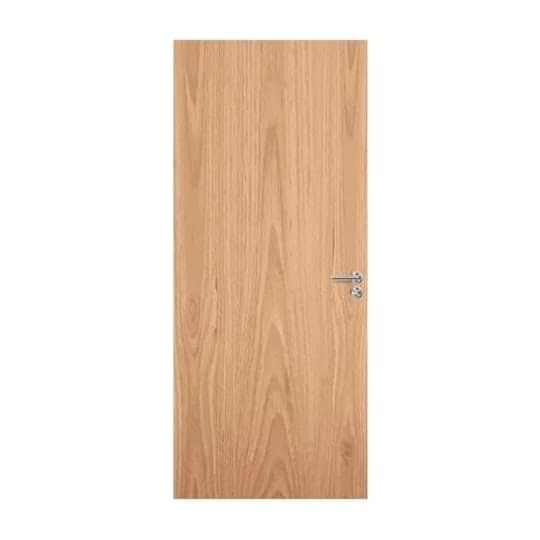
Fire doors for this job
Read next

About the author
Fire Door Range team
We supply certified FD30 and FD60 fire doors to landlords, contractors and housing providers across the UK. Every door is third-party tested to BS 476 Part 22 and BS EN 1634-1 with full Declarations of Performance, and our sister company C&C Fire Prevention Ltd handles FIRAS / BM TRADA certified installation. We write about the standards, regulations and practical decisions that shape day-to-day fire door specification — to help you get the right doors, fitted correctly, first time.
Looking for Fire Doors?
Browse our certified range of FD30 and FD60 fire doors.