 Prestige Awards 2025/26 Winner
Double Fire Door Regulations: Ratings, Meeting Stiles and When They Are Required
 Fire Door Range team·10 min read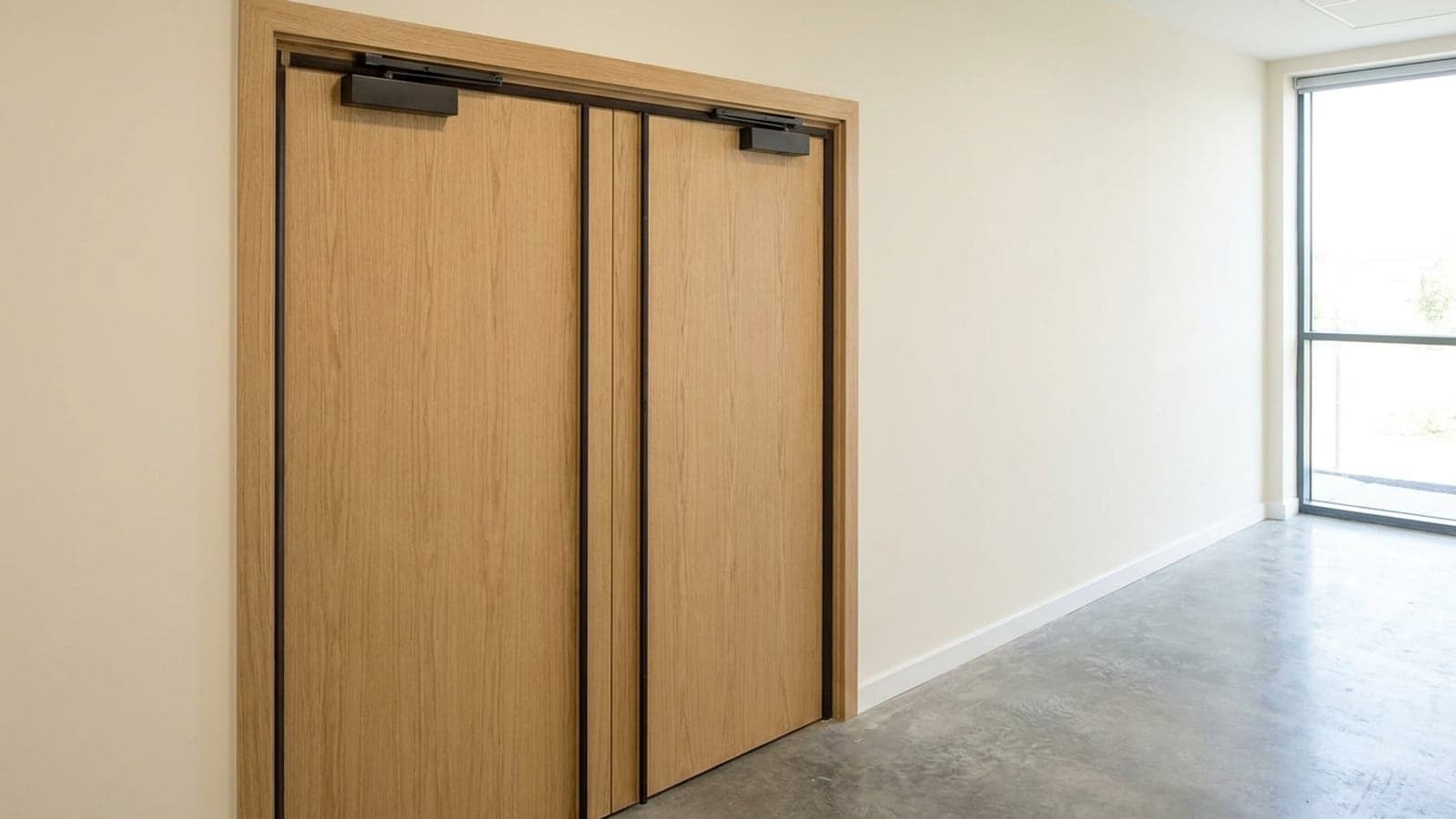
Double fire doors — a pair of fire-resisting leaves hung in one frame — turn up wherever an opening is too wide, too busy, or too important for a single leaf. Hospital corridors, care home escape routes, school halls, commercial entrances and plant rooms all rely on them. But a double fire doorset is not simply two single doors side by side; the point where the two leaves meet is a tested detail, and getting it wrong is one of the most common ways a "fire door" turns out not to be one. This guide explains when the regulations call for double doors, what rating they need, and what makes a certified pair compliant. You can browse our double fire doors for the standard configurations, or compare the trade-offs in our guide to single versus double fire doors.
When are double fire doors required?
There is no single regulation that says "use double doors here". Instead, the requirement falls out of the clear width a door has to provide. Approved Document B of the Building Regulations, supported by BS 9999 for commercial buildings, sets minimum clear opening widths for escape routes based on the number of people who may need to use them. Once the required width exceeds what a single leaf can sensibly deliver — a single leaf much wider than about 1000mm becomes heavy, slow to close and awkward to use — a double or leaf-and-a-half doorset becomes the practical answer.
Double doors are also specified where wide access is needed for everyday reasons: moving beds and equipment through a hospital, manoeuvring a bariatric wheelchair or evacuation sledge in a care home, or simply handling high two-way footfall in a busy building. The fire strategy and the access requirements are decided together, but the door must still meet the fire-resistance period the strategy demands.
Fire rating: FD30 vs FD60 double doors
A double fire door carries the same FD ratings as a single — most commonly FD30 (30 minutes) or FD60 (60 minutes), with an S suffix (FD30S / FD60S) where cold-smoke control is required, which is the norm on escape routes. The crucial principle is that the rating belongs to the complete certified doorset as it was tested: both leaves, the frame, the seals, the meeting stile and all the ironmongery, assessed together to BS 476 Part 22 or BS EN 1634-1. If you are unsure which period your project needs, our FD30 vs FD60 guide walks through the decision.
The meeting stile: what makes a pair fire-rated
The meeting stile — the vertical line where the two leaves come together — is the single biggest difference between a pair and two singles, and it is where uncertified "double doors" fail. In a tested pair, that junction is protected: the leaves are either rebated (one overlaps the other) or square-edged with an astragal cover strip, and intumescent seals are run along the meeting stile so that, in a fire, the gap between the leaves is sealed as the intumescent expands. You cannot recreate this reliably by hanging two single fire doors in a wide frame, because the meeting-stile detail was never part of their test. Always specify a doorset certified as a pair, and check that the certification covers the exact configuration you are buying — a point our fire door certification guide explains in full.
Closers and the closing sequence
Both leaves of a double fire door need their own controlled self-closing device to BS EN 1154, because each leaf must close and latch on its own. Where the leaves are rebated, they also have to close in the correct order — the rebate means one leaf must shut before the other or they will clash and leave a gap. This is the job of a door selector (coordinator) device certified to BS EN 1158, which holds one leaf back until the other has closed. Where the doors are routinely held open for access, that must be done with electromagnetic hold-open devices to BS EN 1155 wired into the fire alarm, never with wedges. Choosing the right closers is covered in our guide to self-closing devices.
Equal pairs versus leaf-and-a-half
Not all pairs are symmetrical. An equal pair has two leaves of the same width and suits openings that genuinely need the full width in regular use. A leaf-and-a-half (or unequal pair) has one normal-width active leaf used day to day, plus a narrower secondary leaf that is normally held shut by flush or shoot bolts and only opened when wide access is needed. The leaf-and-a-half is popular on escape routes because it gives an everyday door that closes reliably, with the extra width available on demand. On any pair, the bolts and hardware on the inactive leaf must be appropriate to a fire doorset and covered by its certification.
Sizing a pair, and ordering it as one assembly
Double doors are usually the answer once an opening exceeds roughly 1000mm — wider than that and a single leaf becomes heavy, prone to dropping on its hinges, and awkward on an escape route. They are standard in corridors, lobbies, hotel and hospital circulation, school corridors, and anywhere goods or beds have to pass through.
Size the opening backwards from the clear opening width you actually need, not forwards from the brickwork. Work back through the leaf widths, the frame sections, the meeting-stile detail and the 2–4mm gaps, and only then check it against the structural opening; doing it the other way round is how pairs end up needing to be trimmed on site beyond their permitted tolerance. Remember that on an unequal pair — leaf-and-a-half — the clear width in everyday use is only the active leaf, because the passive leaf stays bolted shut until someone releases it. If the wide clear opening is needed regularly rather than occasionally, an equal pair is usually the better answer.
The passive leaf is held by flush bolts at head and threshold, which must themselves be fire-rated and tested with the doorset. This is the detail most often substituted on site for whatever is in the van, and it invalidates the certification just as surely as the wrong hinge would.
Above all, order the pair as a single assembly. The leaves, frame, meeting-stile configuration, coordinator, flush bolts, seals, closers and hinges are certified together as one tested unit — mixing components from different manufacturers, or adding untested hardware afterwards, breaks the chain of evidence even when every individual part is itself fire-rated. On refurbishment work, where existing openings rarely match modern standard sizes, a made-to-measure certified pair is usually both safer and cheaper than trying to force a stock pair to fit.
Certification and documentation
Because a pair is tested as an assembly, the documentation matters even more than on a single door. Insist on the Declaration of Performance and the third-party certification for the doorset as a pair, confirm the meeting-stile and ironmongery details match what you are buying, and cross-check the reference against the scheme's register. Correct fitting is just as critical — a perfectly made pair can be compromised by poor installation — which is why we cover it in our guide to fire door installation. Keep all of this on file as part of the building's records; under the Building Safety Act's golden thread, it will be asked for.
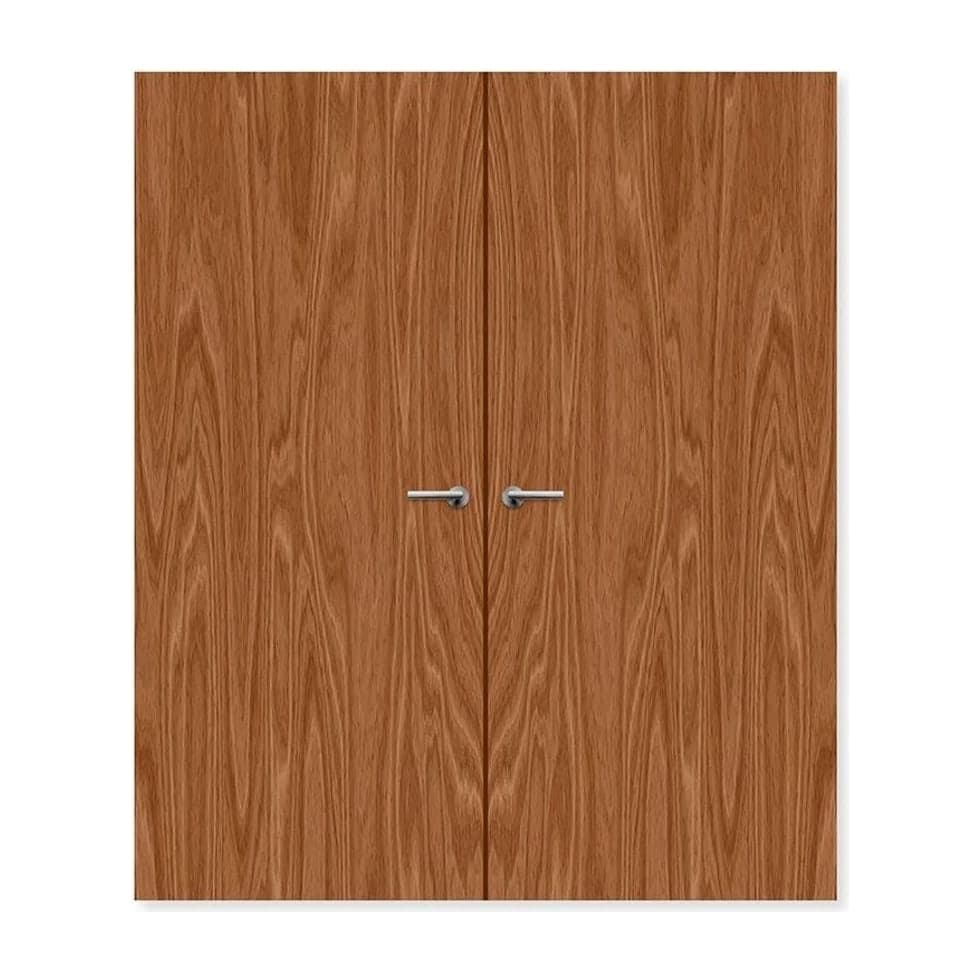
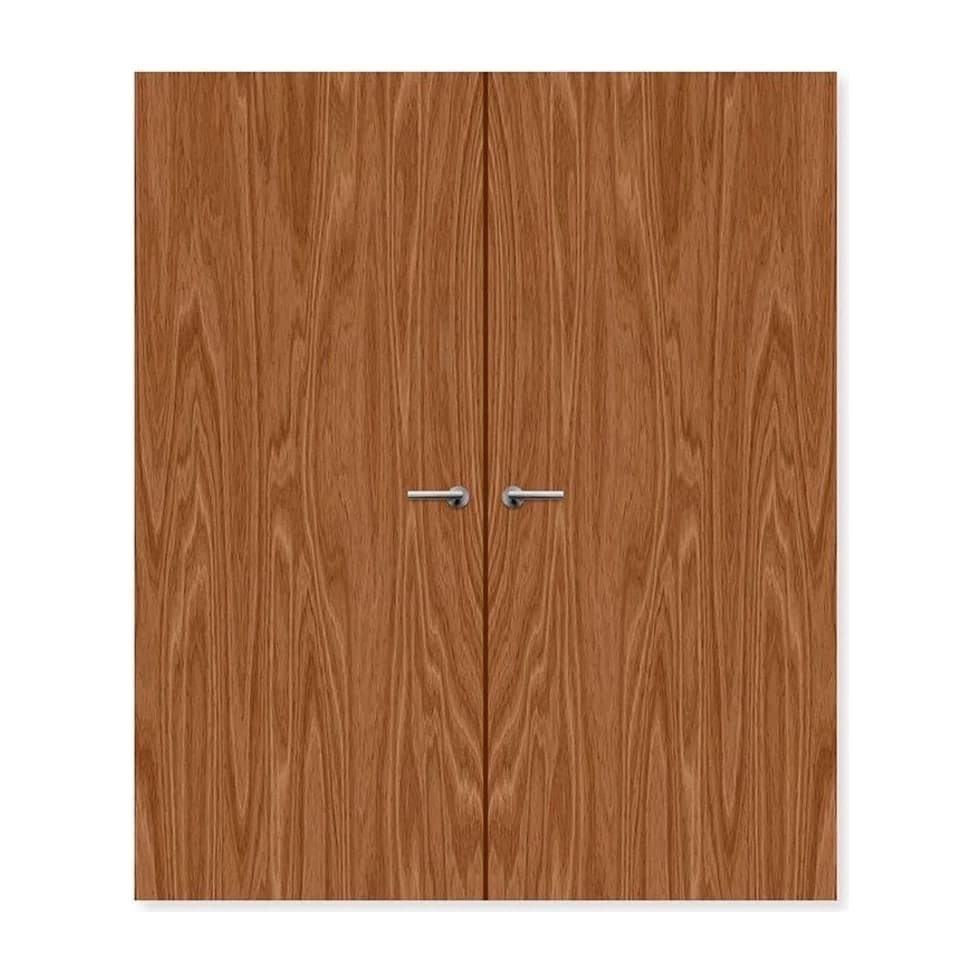
For standard openings we supply certified FD30 and FD60 double doorsets, and for anything non-standard we build certified made-to-measure pairs to the exact size and configuration. Request a quote with your opening sizes, or contact us and we will confirm the right specification leaf by leaf.
FAQ
Frequently asked questions
When are double fire doors required?
Double fire doors are used when the clear opening width required for an escape route exceeds what a single leaf can sensibly provide, or where wide access is needed for beds, equipment or high footfall. The required width comes from Approved Document B and BS 9999 based on occupancy, and a single leaf much wider than about 1000mm becomes impractical, so a double or leaf-and-a-half doorset is specified instead.
Do both leaves of a double fire door need a closer?
Yes. Each leaf must have its own controlled self-closing device to BS EN 1154 so it closes and latches independently. Where the leaves are rebated, a door selector or coordinator device to BS EN 1158 is also needed so the leaves close in the correct order. Any hold-open arrangement must use electromagnetic devices to BS EN 1155 wired to the fire alarm.
What is the meeting stile on a double fire door?
The meeting stile is the vertical line where the two leaves come together. In a certified pair it is a tested detail: the leaves are either rebated or fitted with an astragal cover strip, with intumescent seals along the joint so the central gap is sealed when the intumescent expands in a fire. It is the main thing that distinguishes a real fire-rated pair from two single doors.
Can two single fire doors be used as a double door?
No. A double fire door must be certified and tested as a pair, because the meeting-stile junction where the leaves come together is part of the test. Hanging two single fire doors in a wide frame does not recreate that tested detail, so the assembly cannot be relied on to perform and would not be compliant. Always specify a doorset certified for the exact pair configuration.
What fire rating do double fire doors need?
The same ratings as single doors — most commonly FD30 or FD60, with an S suffix (FD30S/FD60S) for cold-smoke control on escape routes. The required period is set by the building fire strategy and Approved Document B. The rating applies to the complete certified doorset as tested, including both leaves, the frame, the seals, the meeting stile and the ironmongery.
Related products
Fire doors for this job
Read next
About the author
Fire Door Range team
We supply certified FD30 and FD60 fire doors to landlords, contractors and housing providers across the UK. Every door is third-party tested to BS 476 Part 22 and BS EN 1634-1 with full Declarations of Performance, and our sister company C&C Fire Prevention Ltd handles FIRAS / BM TRADA certified installation. We write about the standards, regulations and practical decisions that shape day-to-day fire door specification — to help you get the right doors, fitted correctly, first time.
Looking for Fire Doors?
Browse our certified range of FD30 and FD60 fire doors.