 Prestige Awards 2025/26 Winner
Fire Door Thickness Explained: 44mm vs 54mm
 Fire Door Range team·6 min read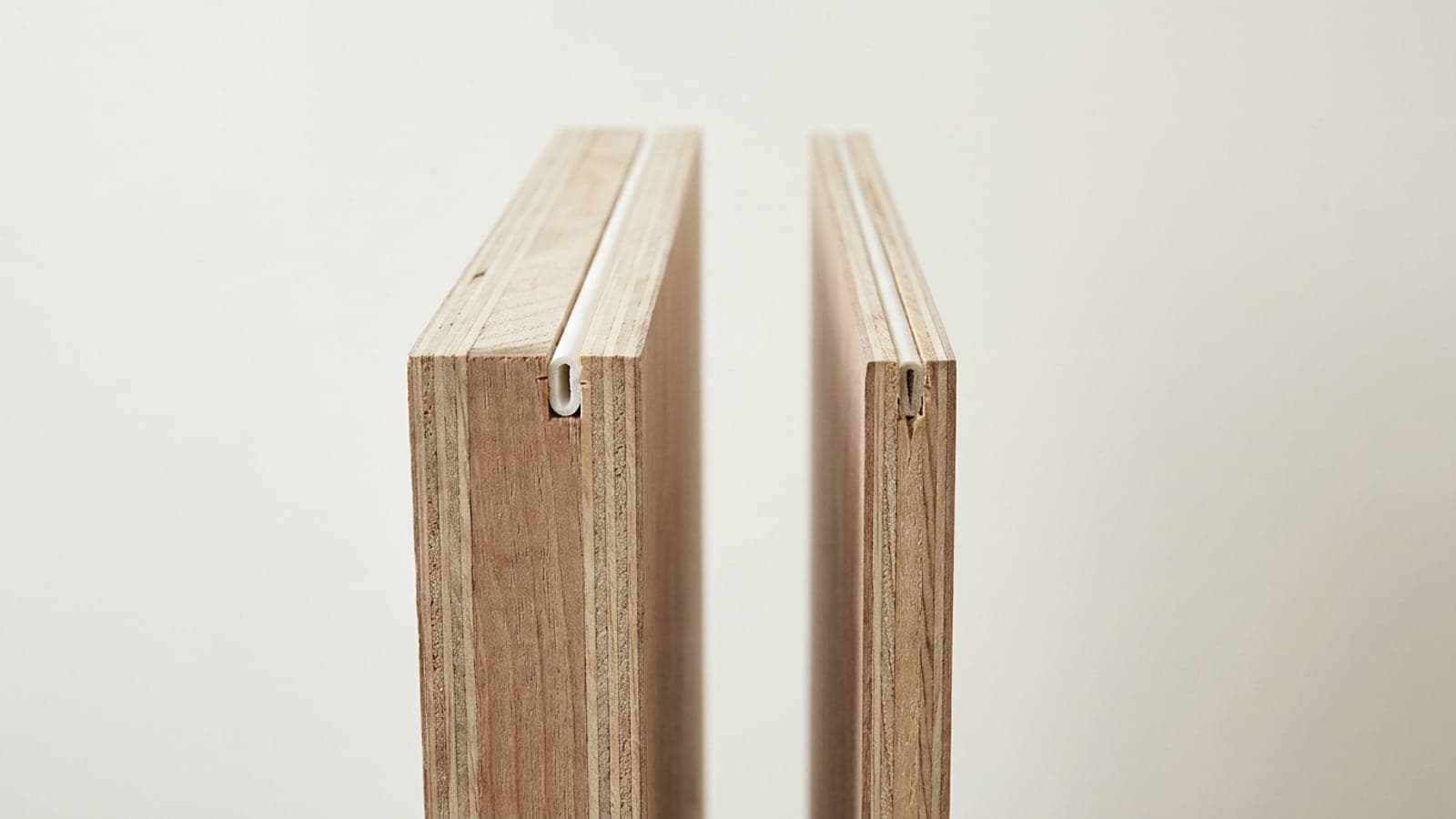
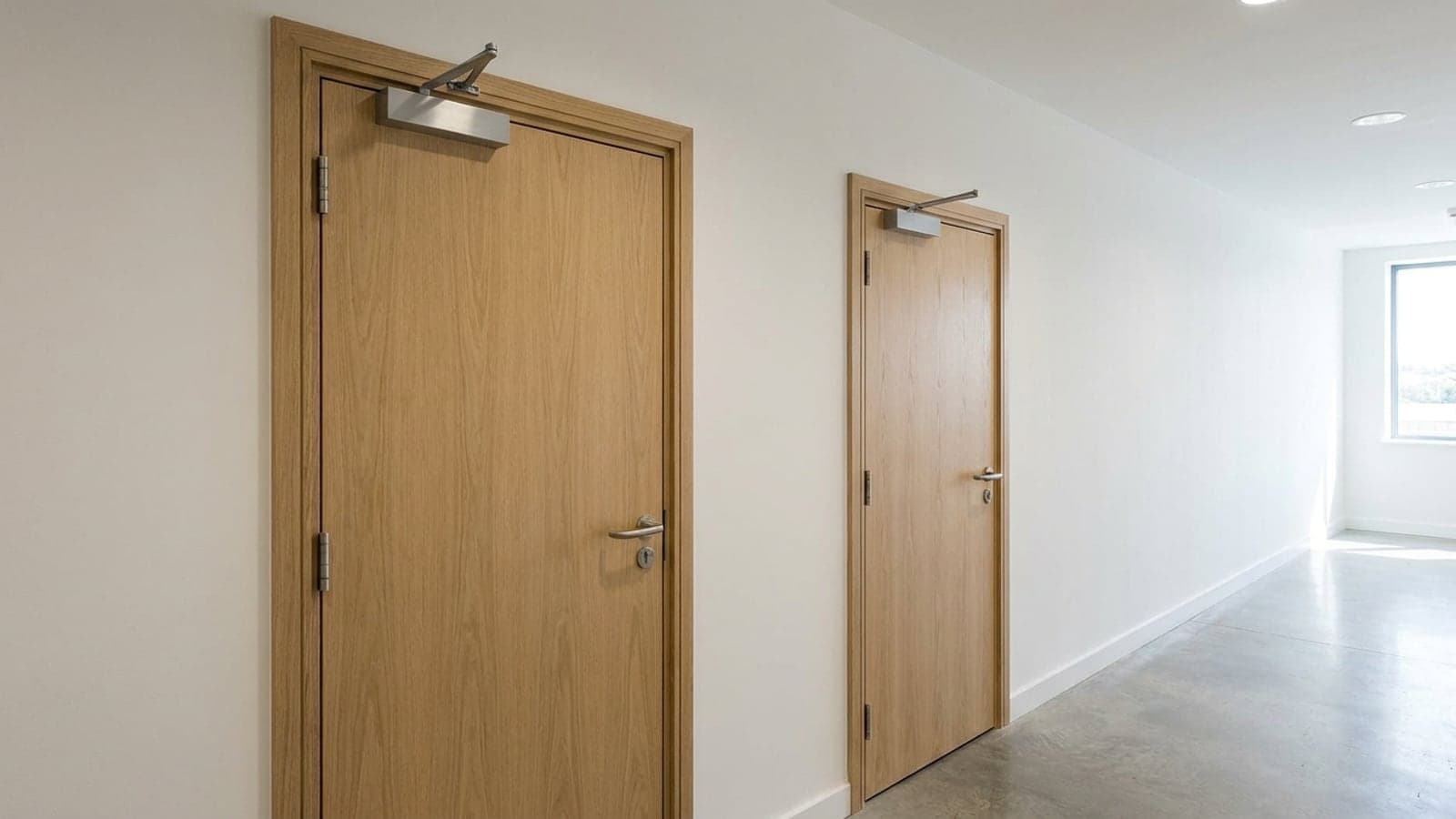
Door leaf thickness is one of the first figures on a fire door datasheet, and one of the most misunderstood. The two numbers you see again and again on UK fire doors are 44mm and 54mm, and they map closely — though not perfectly — onto the two most common ratings. This guide explains what those numbers mean, why FD60 doors are thicker than FD30 doors, and why thickness on its own never tells the whole story. Before you browse our certified fire doors, it is worth understanding what the leaf thickness on the spec sheet is actually telling you.
Why FD30 doors are usually 44mm and FD60 doors 54mm
A fire door earns its rating by surviving a furnace test to BS 476: Part 22 or BS EN 1634-1 for the stated period — thirty minutes for an FD30 door, sixty for an FD60 door. Delivering sixty minutes of integrity needs more material in the leaf: a denser core, thicker lippings, and more room for intumescent protection around the edges. In practice that pushes most FD60 leaves to around 54mm, while most FD30 leaves sit at around 44mm. The numbers are a useful rule of thumb when you are scanning a door schedule, but they are a consequence of the tested design, not the cause of the rating.
Thickness alone does not make a fire door
This is the critical point: a door is not FD60 because it is 54mm thick. It is FD60 because a complete doorset — that exact leaf, core, lippings, seals, frame and ironmongery — passed a sixty-minute test as an assembly. Plenty of 54mm non-fire doors exist, and trimming a 54mm fire door down on site does not keep it at FD60; over-trimming the leaf can invalidate the rating entirely. Always work from the certification and the manufacturer's permitted tolerances, not the tape measure. Our guide to fire door certification explains what evidence proves a door's rating.
Core construction behind the thickness
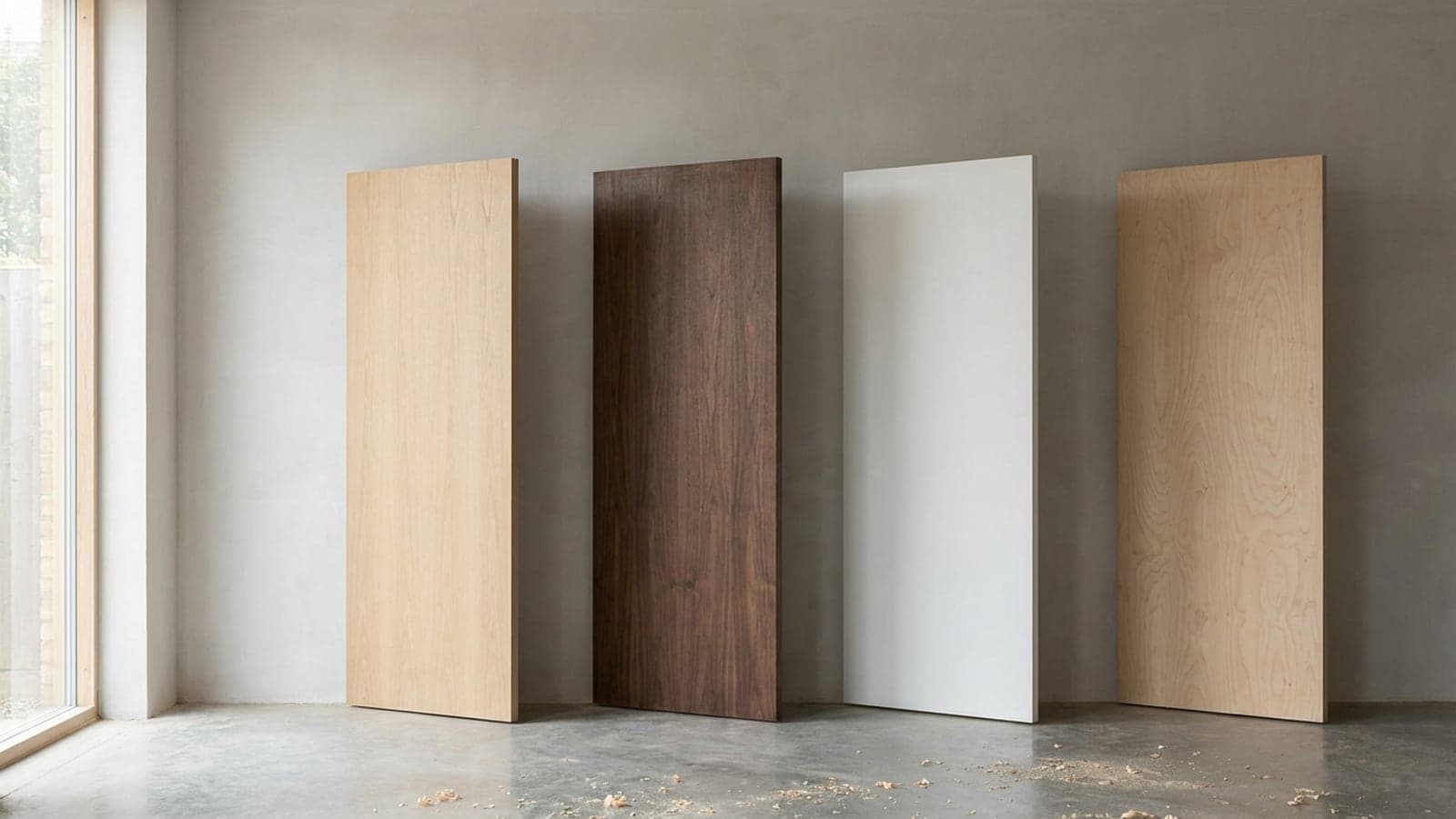
What sits inside the leaf matters more than the millimetres. FD30 and FD60 doors are typically built around a solid composite core — high-density particleboard, flaxboard, or laminated timber — chosen and tested for its behaviour under fire. The core is lipped on the edges with hardwood and faced with the veneer or paint-grade finish you specify. A heavier FD60 core is one reason those doors weigh noticeably more than their FD30 equivalents, which in turn affects the hinges and closers the doorset needs to operate correctly.
What this means when you order
When you measure an existing opening for replacement, record the leaf thickness, the frame rebate depth, and the existing rating if you can find a label — then match like for like unless a fire strategy calls for an upgrade. Swapping a 44mm FD30 leaf for a 54mm FD60 leaf is not a straight drop-in: the frame rebate, hinge positions and ironmongery all change. If your opening is non-standard, a made-to-measure fire door is built to the correct thickness and size from the outset rather than trimmed to fit. Not sure which rating — and therefore which thickness — your project needs? Our FD30 vs FD60 guide walks through it, or request a quote and we will confirm the specification door by door.
Related products
Fire doors for this job
Read next
About the author
Fire Door Range team
We supply certified FD30 and FD60 fire doors to landlords, contractors and housing providers across the UK. Every door is third-party tested to BS 476 Part 22 and BS EN 1634-1 with full Declarations of Performance, and our sister company C&C Fire Prevention Ltd handles FIRAS / BM TRADA certified installation. We write about the standards, regulations and practical decisions that shape day-to-day fire door specification — to help you get the right doors, fitted correctly, first time.
Looking for Fire Doors?
Browse our certified range of FD30 and FD60 fire doors.