 Prestige Awards 2025/26 Winner
BM TRADA Q-Mark Fire Doors: Certification, Checklist and Verification
 Fire Door Range team·8 min read
If you have compared fire door datasheets, you will have seen the BM TRADA Q-Mark logo alongside names like Certifire and BWF-Certifire. Q-Mark is one of the UK's two best-known third-party fire door certification schemes, and it is particularly dominant in the timber sector — but what does the Q-Mark actually certify, and how does it differ from the alternatives? This guide explains what BM TRADA Q-Mark covers, why it is unusual among the schemes, and how to check a Q-Mark door is genuine. For the wider picture across all four UK schemes, see our fire door certification hub.
What is BM TRADA Q-Mark?
BM TRADA — now part of Element Materials Technology, and originally the Timber Research and Development Association — runs the Q-Mark family of certification schemes. Like all credible fire door certification, Q-Mark is third-party and UKAS-accredited: an independent body audits the factory, witnesses ongoing production, sample-tests finished products, and withdraws certification if standards slip. A Q-Mark label is therefore continuous, audited evidence of compliance, not a one-off historic test result, and it is recognised by Building Control and the Building Safety Regulator on the same basis as Certifire.
What makes Q-Mark different: schemes across the whole chain
The feature that sets Q-Mark apart is that it does not stop at the factory gate. BM TRADA operates separate Q-Mark schemes for fire door manufacture, for fire door installation, and for fire door maintenance — along with a related scheme for fire stopping installation. That means a building can hold Q-Mark evidence for the entire chain: a door made under a certified manufacturing scheme, fitted by a Q-Mark certified installer, and maintained under a documented regime. For facilities managers and main contractors who need to demonstrate competence end to end — exactly what the Building Safety Act's golden thread expects — that whole-chain coverage is genuinely valuable. Our own installation teams are certified under BM TRADA Q-Mark and FIRAS for precisely this reason.
Q-Mark vs Certifire
The most common question is whether Q-Mark or Certifire is "better". The honest answer is that both operate to equivalent technical rigour and both are accepted by Building Control on the same basis, so neither is inherently superior. Certifire (run by Warringtonfire) spans timber, steel and composite construction and is the scheme most often specified on large commercial, healthcare and education projects. Q-Mark is especially strong in timber and uniquely spans manufacture, installation and maintenance. In practice the choice is driven by which manufacturer you buy from, not by a meaningful difference in the certification itself — a point we cover in more depth in our guide to fire door certification schemes.
How to verify a Q-Mark fire door
A genuine Q-Mark timber fire door carries a coloured plug or printed label set into the top edge of the leaf, showing the Q-Mark logo, the manufacturer and a unique certificate reference. Two checks confirm it: look at the top edge to confirm the label is present and legible, then cross-reference the certificate number against BM TRADA's online register, which states the door type, core, maximum size and permitted ironmongery. Treat any door without a verifiable register entry as uncertified, whatever the paperwork claims. Every door we supply comes with its certification evidence and Declaration of Performance — and if you want it checked before a fire door inspection or Building Control sign-off, ask us and we will share the documents for the exact door you are buying.
The BM TRADA fire door checklist
BM TRADA's inspection guidance follows the same logic as the BWF 5-step check, but on a Q-Mark door you are also confirming the door still matches its certificate. A practical BM TRADA fire door checklist covers seven points:
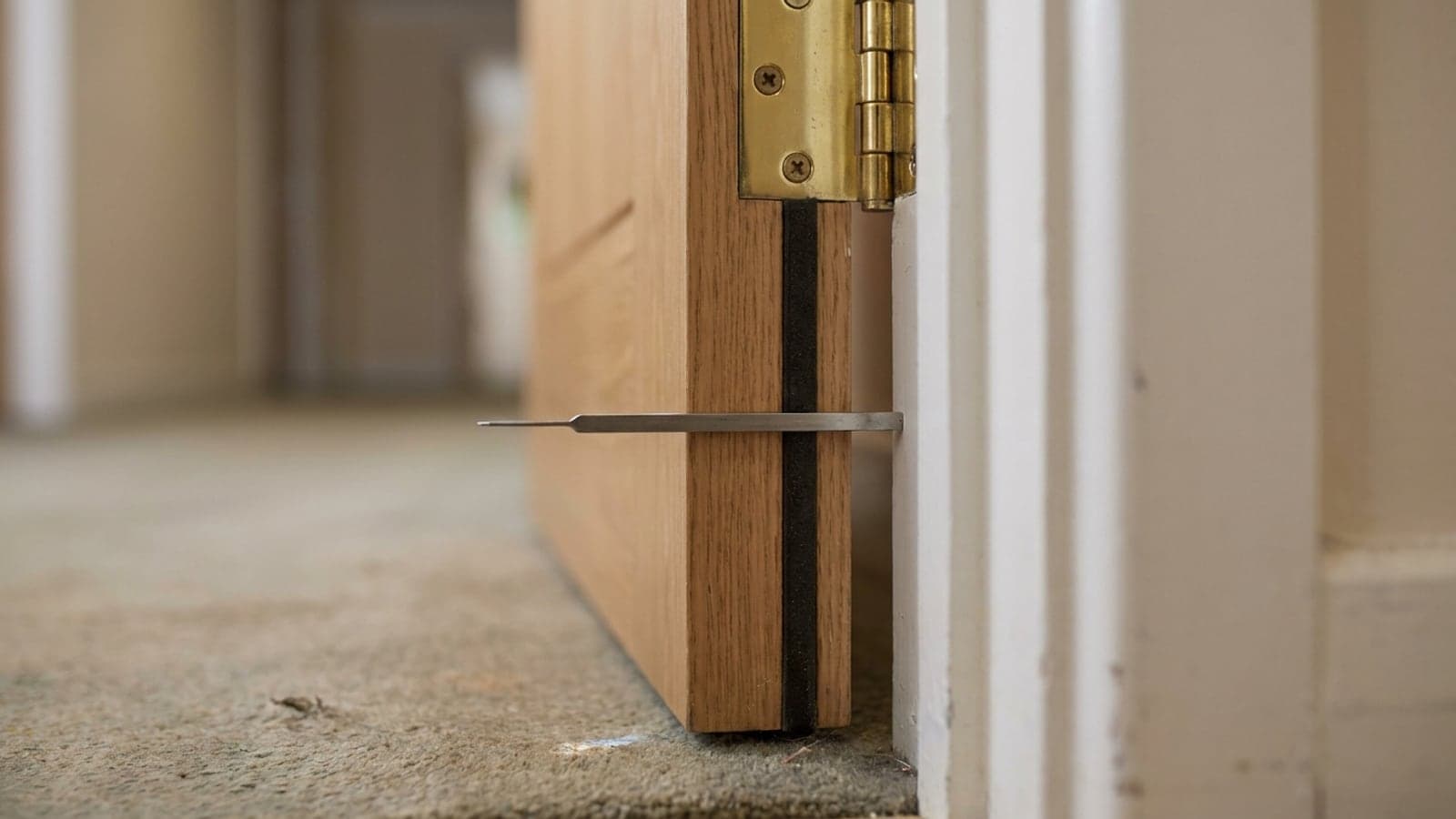
1. Certification — the Q-Mark plug or label is present on the top or hinge edge, legible, and the certificate number matches BM TRADA's register. 2. Leaf and frame condition — no splits, delamination, deep scratches or unauthorised alterations (letterplates, cat flaps and extra glazing void certification unless the certificate permits them). 3. Gaps — 2–4mm at the head and vertical edges, measured with a gap gauge, and no more than the certificate allows at the threshold — see our guide to fire door gaps. 4. Intumescent and smoke seals — continuous, undamaged, not painted over, and of the type named in the certificate. 5. Hinges — usually three, CE/UKCA-marked, fire-rated, with no missing screws or metal fatigue. 6. Closer — closes the door fully into the latch from any opening angle, including from 75mm ajar. 7. Ironmongery and glazing — locks, latches, handles and vision panels are the items the certificate was tested with, not later substitutions.
Anything that fails goes to a competent repairer, and any repair must keep the door within its certified specification — which is exactly what BM TRADA's maintenance scheme audits. If you need this done formally, our fire door inspection service works to this checklist, and because our installers are BM TRADA Q-Mark certified, remedial work stays inside the certification chain rather than breaking it.
FAQ
Frequently asked questions
What is BM TRADA Q-Mark certification on a fire door?
BM TRADA Q-Mark is a UKAS-accredited third-party certification scheme, now run by Element Materials Technology. A Q-Mark fire door comes from a factory whose production is independently audited and sample-tested on an ongoing basis, so every door should match the specification that passed the fire test. The door carries a coloured plug or label with a certificate number traceable on BM TRADA's register.
Are BM TRADA and Q-Mark the same thing?
Q-Mark is the name of the certification schemes; BM TRADA is the certification body that runs them. When people say a "BM TRADA fire door" they almost always mean a door certified under the BM TRADA Q-Mark fire door manufacture scheme.
Is BM TRADA Q-Mark better than Certifire?
Neither is better — both are UKAS-accredited, both are accepted by Building Control on the same basis, and most specifications accept either. Q-Mark is particularly strong in timber doors and uniquely runs separate schemes for manufacture, installation and maintenance, while Certifire is the scheme most often named on large commercial specifications.
What should a BM TRADA fire door checklist cover?
Seven things: the certification plug or label is present and traceable; the leaf and frame are undamaged and unaltered; gaps are 2 to 4mm at the head and edges; intumescent and smoke seals are continuous and unpainted; three fire-rated hinges are secure; the closer shuts the door fully from any angle; and all ironmongery and glazing matches what the certificate was tested with.
How do I find a BM TRADA certified fire door installer?
BM TRADA runs a dedicated Q-Mark fire door installation scheme and publishes a register of certified companies. Using a certified installer keeps the certification chain intact from factory to finished opening — our own installation teams are certified under both BM TRADA Q-Mark and FIRAS.
Related products
Fire doors for this job
Read next

About the author
Fire Door Range team
We supply certified FD30 and FD60 fire doors to landlords, contractors and housing providers across the UK. Every door is third-party tested to BS 476 Part 22 and BS EN 1634-1 with full Declarations of Performance, and our sister company C&C Fire Prevention Ltd handles FIRAS / BM TRADA certified installation. We write about the standards, regulations and practical decisions that shape day-to-day fire door specification — to help you get the right doors, fitted correctly, first time.
Looking for Fire Doors?
Browse our certified range of FD30 and FD60 fire doors.