 Prestige Awards 2025/26 Winner
Fire Door Inspection Checklist: The 5-Step Check and the Full Survey
 Fire Door Range team·12 min read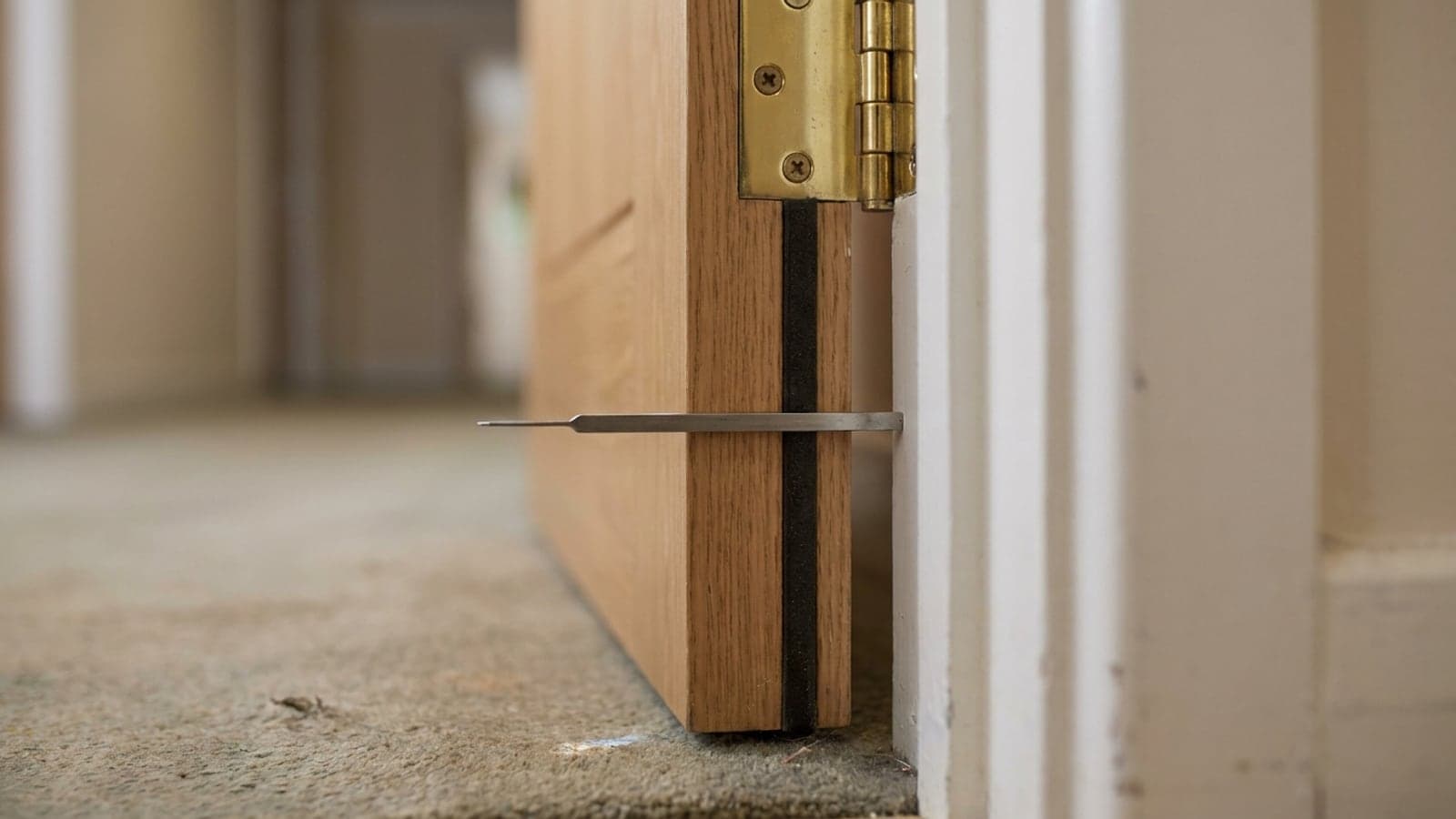
A fire door only works if every part of it works, and the only way to know that is to inspect it. Yet inspection is the single most neglected duty in building fire safety: doors are bought, fitted, and then forgotten until a fire risk assessment, an insurer, or — in the worst case — a fire exposes the defects. This checklist sets out how to inspect a fire door properly. It starts with the quick five-step visual check any trained member of staff can carry out, moves on to the fuller point-by-point survey a competent inspector works through, then covers how often inspections are legally required and who is actually allowed to sign one off. If you would rather hand the whole process to a specialist, our fire door inspection service covers it — but every responsible person should understand what a good inspection looks like.
The 5-step fire door check
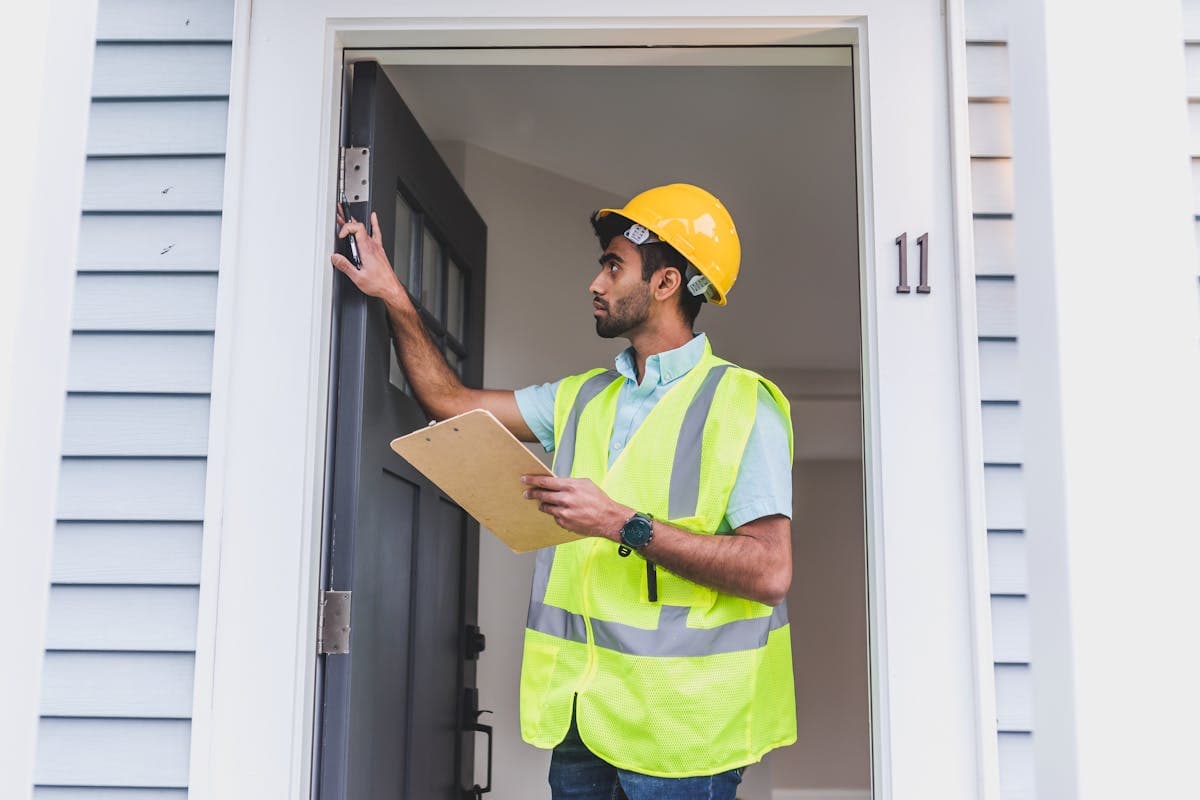
The British Woodworking Federation's Fire Door Safety Week popularised a simple five-step check that anyone can learn in a few minutes. It is not a substitute for a formal inspection, but it is an excellent routine check and the fastest way to catch the most common and most dangerous defects between professional surveys.
- Certification — look on the top or hinge edge of the leaf for a certification label or colour-coded plug carrying the scheme name (Certifire, BM TRADA Q-Mark or similar) and a unique reference. No verifiable label means you cannot prove it is a fire door at all. Our guide to fire door certification explains what the evidence should show.
- Gaps — the gap around the top and sides should be a consistent 3mm (a £1 coin is roughly 3mm), within a 2-4mm tolerance, with no daylight showing. Excessive or uneven gaps stop the intumescent seals bridging the gap when they expand. The threshold gap should be no more than about 8-10mm, reducing to around 3mm where smoke control is required.
- Seals — intumescent strips and smoke seals should run continuously in the leaf or frame, be undamaged, firmly fitted, and not clogged with paint. Smoke seals on FD30S/FD60S doors must make contact with the frame all the way round.
- Hinges — there should be at least three, firmly fixed, with every screw present, tight and of the correct fire-rated type. Missing or loose screws are one of the most common defects found on survey.
- Closing — the door must close firmly onto the latch from any open position, including just a few degrees ajar, and engage without being pushed. A door that does not self-close fully is not doing its job.
The full fire door inspection checklist
A formal inspection to BS 8214:2016 — the code of practice for timber-based fire door assemblies — goes well beyond the five-step check. A competent inspector works methodically through the whole doorset as a tested assembly. The points below are the ones that matter most:
- Certification and traceability — label or plug present, legible, and matching the door's documented specification and Declaration of Performance.
- Leaf condition — no holes, deep gouges, splitting lippings, delamination, or distortion that would breach integrity; no unauthorised cutting-down beyond the manufacturer's permitted tolerances.
- Gaps at head and jambs — measured at several points, a consistent 2-4mm.
- Threshold gap — appropriate to the door type and any smoke-control requirement.
- Intumescent seals — continuous, undamaged, correct type, free to expand, not painted over.
- Smoke seals — present on FD30S/FD60S doors, making full contact with the frame.
- Hinges — three or more, CE/UKCA marked to BS EN 1935, all screws fitted and tight, intumescent hinge pads where the certification requires them.
- Self-closing device — a controlled closer to BS EN 1154 that closes the door fully onto the latch from any angle and over any floor covering.
- Hold-open or free-swing devices — only acceptable if they are certified to BS EN 1155 and wired to the fire alarm so the door releases on activation. Wedges, hooks and tied-back doors are never acceptable.
- Glazing and beading — fire-rated glass only, intact, with the correct intumescent glazing system and securely fixed beads.
- Signage — the correct "Fire door keep shut" (or keep locked / automatic) sign, fitted to both faces as appropriate, in line with the legal signage requirements.
- Apertures and penetrations — any letterplates, air-transfer grilles, locks or cable runs must be certified fire-rated components, not site additions that breach the leaf.
- Frame, fixings and alignment — frame securely fixed and correctly packed, leaf not binding, latch and lock engaging cleanly.
Any door that fails these checks should be referred to a competent inspector.
What surveyors flag most often
Knowing where inspections actually fail lets you fix the problems before an assessor writes them up. Across fire risk assessments and formal surveys, the same defects recur:
- Gaps over 4mm, especially down the hinge side, where hinge wear lets the leaf drop over time.
- Missing, damaged or painted-over intumescent strips — thickly painted seals may not expand far enough to bridge the gap.
- Closers that do not latch the door from a shallow opening angle, or that have been adjusted down because the door "slammed too hard".
- Non-fire-rated hardware substituted during a repair — hinges, locks, handles and letterplates are the usual offenders.
- Unapproved modifications — drilled holes for cables or signage, removed glazing beads, non-rated viewers and letter plates, and doors wedged or tied open.
Glazed fire doors attract particular scrutiny, and this is worth knowing because it is the defect most likely to be missed by an untrained eye. The inspector checks that the glass itself is fire-rated (wired, borosilicate or intumescent-laminated), that the glazing beads are the correct fire-rated type, and that the intumescent gaskets between glass and bead are intact. A glazed fire door fitted with ordinary timber beading instead of fire-rated beading is one of the most serious findings possible — it renders the whole doorset non-compliant, however good the leaf is. Our guide to vision panels and glazing options covers what a compliant glazed door should look like.
Preparing for a formal inspection
The best preparation is simply having done the routine checks all along. Before a scheduled survey, walk the building yourself with the five-step check: confirm every door closes and latches unaided, every seal is intact, and nothing is propped open. Fix the easy defects first — loose hinge screws, a closer that needs adjusting, a wedge that needs removing — because these make up a surprising share of written-up failures.
Then get the paperwork together. Certification evidence and Declarations of Performance for the doorsets, maintenance and repair logs, previous inspection reports, and records of any replacement components. An inspector who can trace a door to its certificate and see a maintained record moves through the survey quickly; one who cannot has to record the door as unverifiable regardless of how good it looks. Under the Building Safety Act's golden thread, that documentation is increasingly the point of the exercise, not an afterthought to it.
How often should fire doors be inspected?
BS 8214 recommends inspecting fire doors at least every six months, and a newly occupied building may warrant more frequent checks in the first year while the doors settle in. High-traffic doors — those in care homes, schools, hospitals and busy commercial corridors — should be checked far more often, in many cases quarterly or even monthly, because intensive use destroys seals and loosens hardware quickly.
In residential buildings, the Fire Safety (England) Regulations 2022, in force since 23 January 2023, set hard legal minimums. In buildings over 11 metres tall, the responsible person must carry out quarterly checks of fire doors in the common parts and must use best endeavours to check every flat entrance door at least annually. In all multi-occupied residential buildings, residents must be given information about the importance of fire doors. These are floors, not ceilings — six-monthly remains the sensible baseline for most other premises.
Who can inspect a fire door?
There are two levels. Routine visual checks — the five-step check — can be carried out by any trained, competent member of staff, and building this into a regular routine is exactly what the law expects. Formal, detailed inspections and any remedial work should be carried out by a competent person with genuine knowledge and experience of fire doors. Increasingly, that means a third-party certificated inspector, such as someone working under the BM TRADA Q-Mark fire door maintenance scheme or an equivalent recognised qualification.
The Building Safety Act 2022 has pushed competence and record-keeping up the agenda through the "golden thread" of building information. Whoever inspects your doors, the inspection is only worth anything if it is documented: dated records, photographs, the defects found, and the remedial action taken. That file is what an insurer, a fire and rescue authority, or a tribunal will ask to see.
What to do when a door fails
A failed inspection is not a disaster, but ignoring it is. Log the defect, prioritise it by risk, and arrange repair by a competent person — always within the manufacturer's permitted tolerances. Replace damaged intumescent and smoke seals like-for-like with the correct certified type; never plane a leaf beyond the permitted amount to "fix" a large gap, because over-trimming exposes the core and voids the certification. Where a leaf is badly damaged, distorted, or has lost its certification, replacement is usually the safer and cheaper long-term answer.
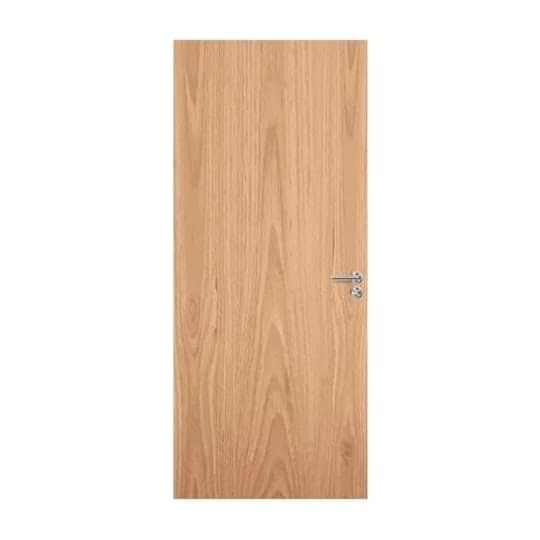
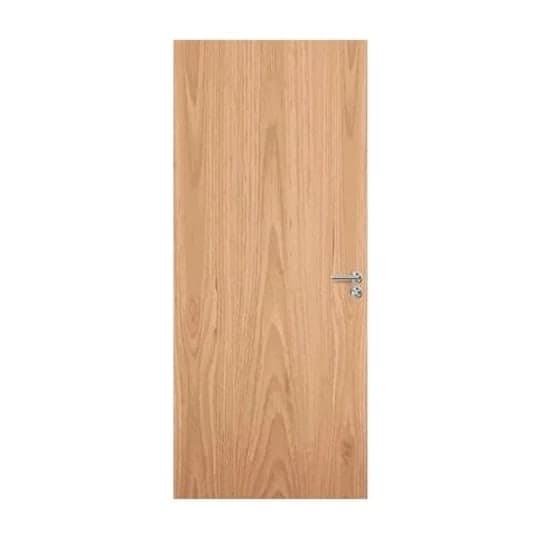
If your inspection has turned up doors that need replacing, we supply certified FD30 and FD60 doorsets with full documentation, and certified made-to-measure fire doors for non-standard openings. Request a quote with your door schedule, or get in touch and we will work through the remedial list with you.
FAQ
Frequently asked questions
How often must fire doors be inspected?
BS 8214 recommends inspecting fire doors at least every six months, with more frequent checks for high-traffic doors and newly occupied buildings. Under the Fire Safety (England) Regulations 2022, buildings over 11 metres tall must have quarterly checks of communal fire doors and annual best-endeavours checks of flat entrance doors. Six months is a sensible baseline for most premises.
What is the 5 step fire door check?
The BWF 5-Step Check is a quick visual inspection covering: Certification (a label or plug on the top or hinge edge), Gaps (a consistent 2-4mm around the leaf), Seals (intumescent and smoke seals intact and unpainted), Hinges (at least three, firmly fixed with all screws present), and Closing (the door self-closes fully onto the latch from any position). It is a routine check, not a substitute for a formal inspection.
Who is legally responsible for fire door inspections?
The responsible person under the Regulatory Reform (Fire Safety) Order 2005 — usually the employer, owner, occupier or managing agent in control of the premises or the common parts. They must keep fire doors in efficient working order, which in practice means arranging regular inspection and maintenance by competent people and keeping records of it.
Can I inspect my own fire doors?
Routine visual checks, such as the 5-Step Check, can be carried out by any trained, competent member of staff. Formal detailed inspections and remedial work should be carried out by a competent person with genuine fire door knowledge, increasingly a third-party certificated inspector such as one working under the BM TRADA Q-Mark maintenance scheme. Either way, the inspection must be documented.
What is the correct gap around a fire door?
To BS 8214, the gap at the top and along the sides should be a consistent 3mm, within an acceptable range of 2-4mm. The threshold gap should be no more than about 8-10mm, reducing to around 3mm where smoke control is required. Excessive or uneven gaps stop the intumescent seals bridging the gap when they expand in a fire.
What are the most common reasons fire doors fail an inspection?
The most frequent failures are excessive or uneven gaps around the leaf, missing or painted-over intumescent and smoke seals, self-closing devices that do not fully close and latch the door, non-fire-rated hinges or hardware fitted during past repairs, and unfilled holes or unapproved alterations to the leaf. Doors wedged or tied open, and glazed doors fitted with ordinary rather than fire-rated beading, are also commonly written up.
How should I prepare for a fire door inspection?
Walk the building beforehand using the five-step check and fix the straightforward defects — loose hinge screws, closers needing adjustment, doors being propped open. Then gather the paperwork: certification evidence and Declarations of Performance, maintenance and repair logs, and previous inspection reports. A door that cannot be traced to its certificate has to be recorded as unverifiable however sound it looks.
Related products
Fire doors for this job
Read next

About the author
Fire Door Range team
We supply certified FD30 and FD60 fire doors to landlords, contractors and housing providers across the UK. Every door is third-party tested to BS 476 Part 22 and BS EN 1634-1 with full Declarations of Performance, and our sister company C&C Fire Prevention Ltd handles FIRAS / BM TRADA certified installation. We write about the standards, regulations and practical decisions that shape day-to-day fire door specification — to help you get the right doors, fitted correctly, first time.
Looking for Fire Doors?
Browse our certified range of FD30 and FD60 fire doors.