 Prestige Awards 2025/26 Winner
Flat Entrance Doors After Grenfell: What's Changed
 Fire Door Range team·9 min read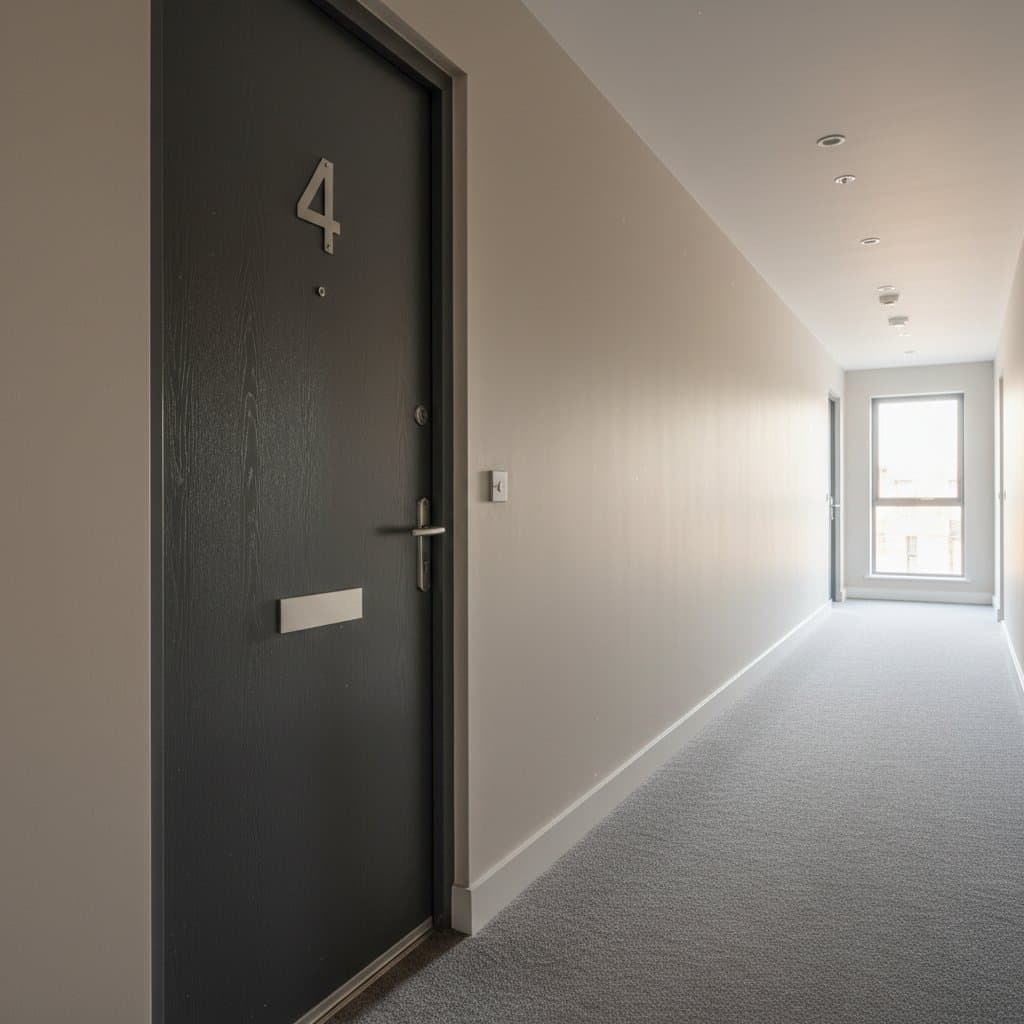
The Grenfell Tower fire of June 2017 killed seventy-two people and exposed failings that ran far deeper than the cladding system that allowed the blaze to spread up the building's exterior. Among the many uncomfortable truths surfaced by the subsequent inquiry and by Dame Judith Hackitt's Independent Review of Building Regulations and Fire Safety was a realisation that the flat entrance door, long treated as a semi-domestic item somewhere between joinery and architectural hardware, was in fact a critical line of compartmentation. Post-incident testing of doors drawn from housing stock across the country showed that products which had once held thirty-minute certification were failing in minutes. For freeholders, managing agents and housing associations responsible for blocks of flats, the legal and technical ground has shifted decisively since, and the flat entrance door sits squarely in the middle of the change.
The post-Grenfell timeline
In the immediate aftermath of the fire, the then Ministry of Housing, Communities and Local Government wrote to building owners across England urging them to check the condition and specification of flat entrance doors in their blocks, and a large-scale testing programme followed. The results were sobering: composite doors which had originally passed BS 476 Part 22 when tested as a complete, brand-new assembly were failing when reconstructed with period-authentic ironmongery, intumescent seals and frame components. The industry learned, uncomfortably, that a generic type-test approval was not enough and that every variation of hardware, glazing and frame could alter the real-world fire performance of a leaf.
The legislative response built in layers. The Fire Safety Act 2021 amended the Regulatory Reform (Fire Safety) Order 2005 to confirm explicitly that flat entrance doors opening onto common parts fall within the scope of the Responsible Person's duties, closing a long-running ambiguity about where a landlord's responsibility ended and a leaseholder's began. The Building Safety Act 2022 then introduced a much wider framework of accountability for higher-risk buildings, and the Fire Safety (England) Regulations 2022, which came into force in January 2023, imposed concrete new inspection duties including annual checks of every flat entrance door in residential buildings over eleven metres in height. Taken together, these instruments removed any remaining room for a relaxed approach.
What has changed in specification
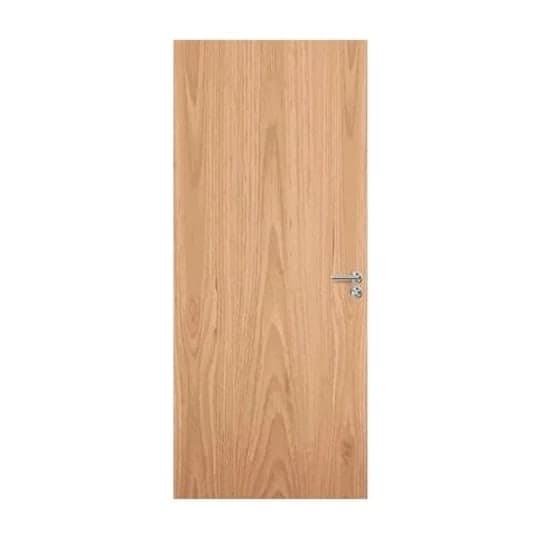
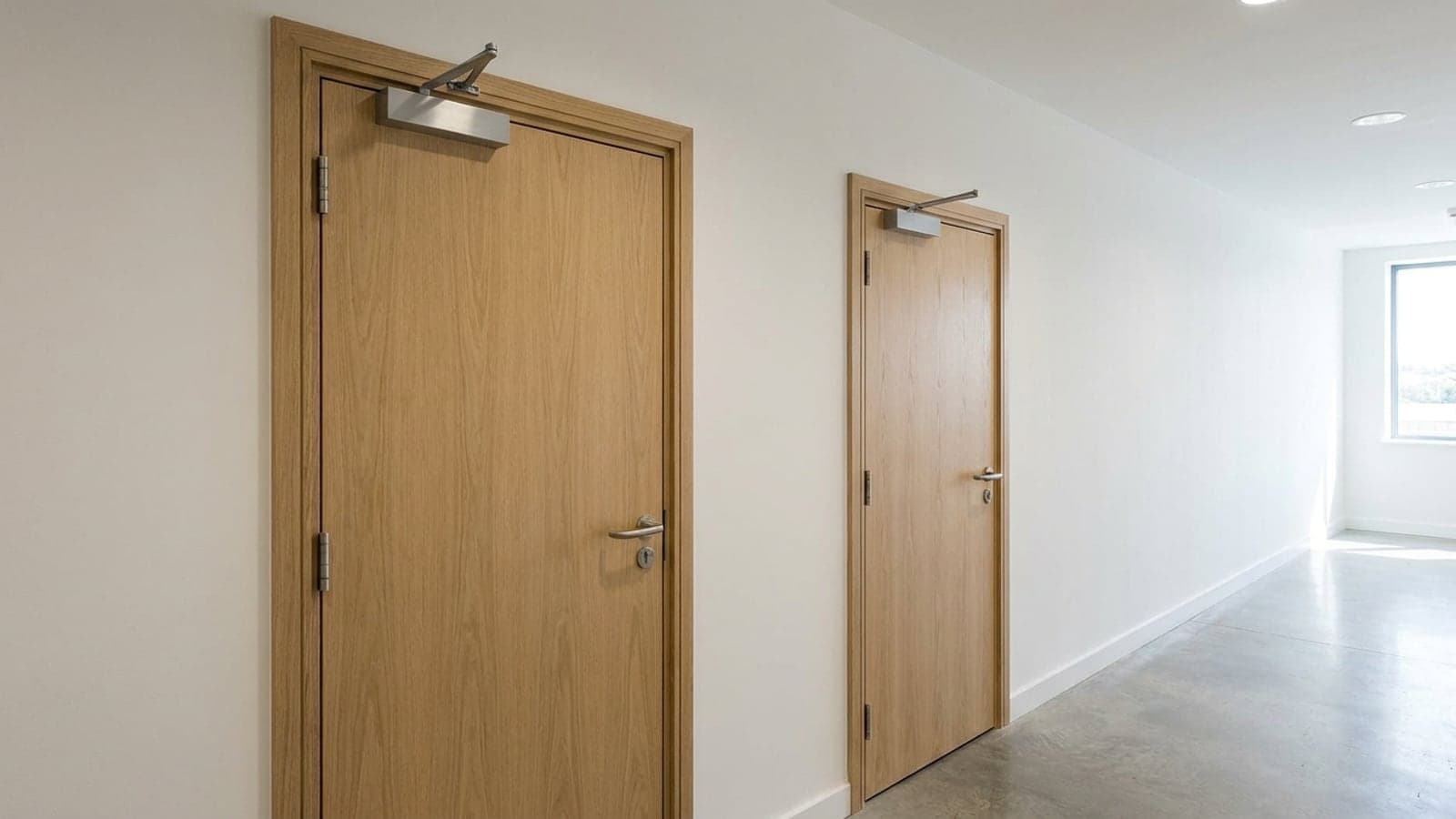
The baseline specification has moved up. Where a standard FD30 leaf might once have been considered adequate for a flat entrance, the expectation today is firmly FD30S as a minimum, with the "S" designation indicating that the assembly incorporates cold smoke seals tested to BS 476 Part 31.1 or the relevant clauses of BS EN 1634-3. Smoke matters because in a compartment fire the toxic gases migrate ahead of the flame front, and cold smoke passing through the gap around an unsealed leaf is what most often renders a protected escape route unusable. Any responsible refurbishment programme now treats smoke sealing as non-negotiable rather than an optional upgrade, and our FD30 fire doors are supplied with the seals, hinges and closer arrangements that the certification body tested with the leaf.
Third-party certification has also become, in practical terms, mandatory. A manufacturer's declaration that a leaf "meets" BS 476 Part 22 or BS EN 1634-1 is no longer accepted at face value by insurers, building control bodies or competent fire risk assessors; a UKAS-accredited third-party scheme such as BM TRADA Q-Mark or Certifire is now the working benchmark. Composite doors in particular need specific test evidence covering the exact configuration being installed, because substitution of a single hinge, letter plate or vision panel can invalidate the fire performance. The door leaf, the frame, the intumescent seals, the ironmongery and the threshold must all form part of the tested assembly rather than being bolted together from compatible-looking parts.
What the Responsible Person must do
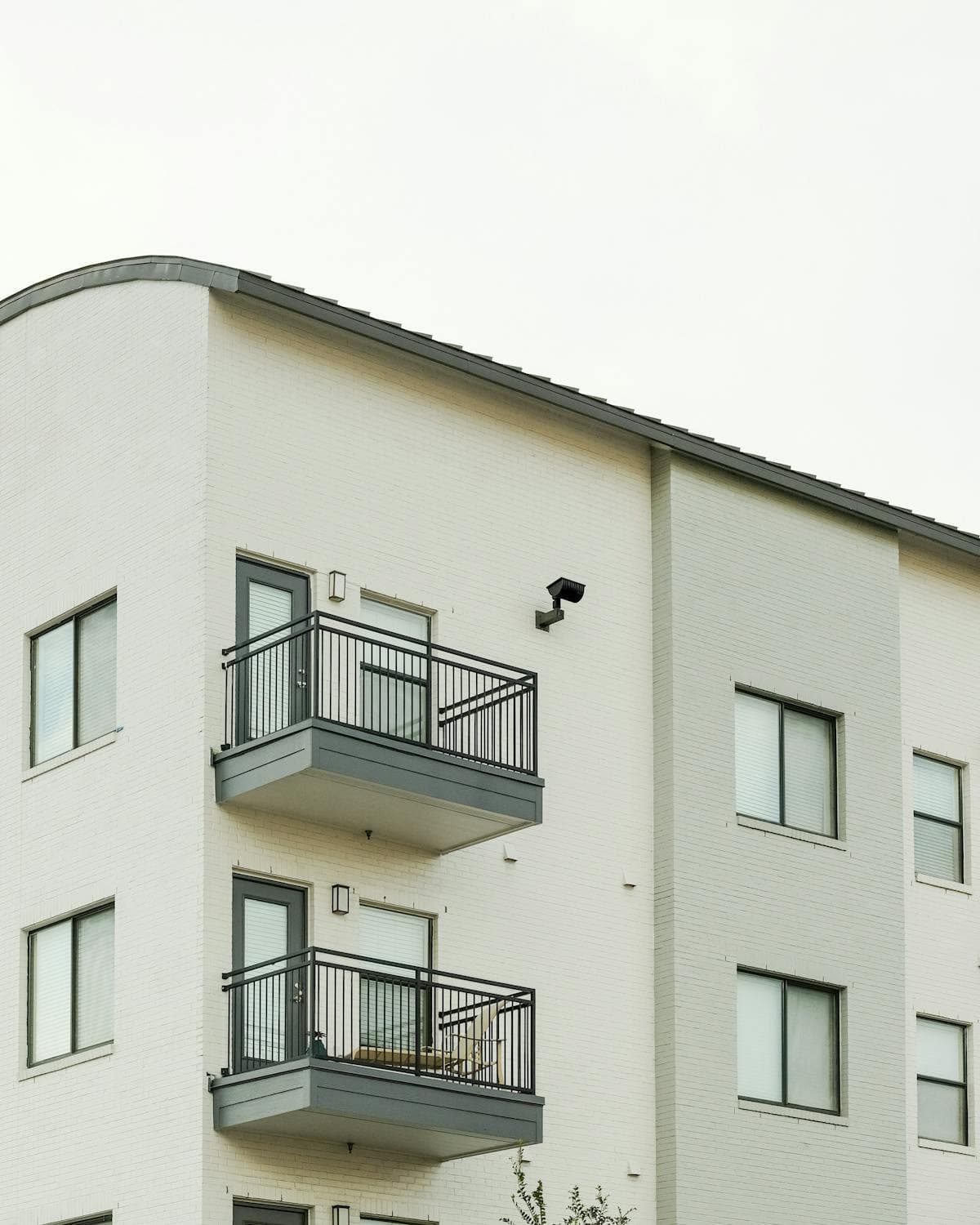
Under the Fire Safety (England) Regulations 2022, the Responsible Person for a residential building over eleven metres in height must arrange for every flat entrance door to be inspected at least annually, and for doors leading into communal areas, stairwells and lobbies to be checked at least every three months. The inspection is not a cursory glance at whether the door shuts: it should cover the condition of the intumescent and smoke seals, the integrity of the leaf and frame, the operation of the self-closing device, the state of any glazing and glazing beads, the ironmongery, and evidence of unauthorised modifications such as spy-hole drilling or letterbox replacement. Any defect that materially affects fire performance triggers a duty to act, and records of every check must be retained as part of the golden thread of building safety information the Building Safety Act now requires.
Where inspection reveals systemic problems, the Responsible Person may face the prospect of a full block-wide replacement programme rather than piecemeal remedial works. That raises a communications challenge as much as a technical one, because access to each flat must be negotiated with the leaseholder or tenant, and the programme must be timed, documented and justified in a way that will stand up to scrutiny from a fire risk assessor, the fire and rescue service and, where applicable, the Building Safety Regulator. Dealing with the small minority of occupiers who refuse access on schedule is a legal headache that managing agents have had to build into their processes, and the costs of delay can be significant.
Replacement considerations
The question of who pays for a replacement programme is rarely straightforward. The division of responsibility between freeholder and leaseholder depends on the wording of the individual lease, and while protections introduced by the Building Safety Act limit what qualifying leaseholders can be charged for historical remediation in certain higher-risk buildings, ongoing maintenance and compliance costs are frequently recoverable through the service charge. Block-wide replacement across even a modest development runs into six figures quickly once doors, frames, ironmongery, installation, waste removal and making-good are counted, and programme logistics become a project in their own right. Anyone commissioning such work is well advised to build realistic contingency for access delays and for doors discovered during the works to be in a worse condition than the risk assessment suggested.
Technically, the replacement door must be compatible with the existing frame or the frame must be replaced at the same time, because retrofitting a new leaf into an out-of-square or non-matching frame will void the certification regardless of how good the leaf itself is. At the same point it makes sense to bring the doorset up to date with Approved Document M, which governs accessibility: lever furniture rather than knobs, a clear opening width that a wheelchair user can actually pass through, and a threshold that does not present a trip hazard. Fire performance, smoke resistance, security rating, acoustic rating and accessibility should all be specified together rather than traded off against each other after the event, and the assembly should be installed by fitters trained and certified to do so. You can read more about who we are and how we approach specification and supply for projects of this kind.
A flat entrance door is no longer a piece of joinery that can be chosen from a brochure on aesthetic grounds. It is a safety-critical component of the building's compartmentation strategy, an item of life-safety infrastructure that the law now expects to be specified, tested, installed, inspected and documented to a demonstrable standard. Any replacement programme should start from that premise and should be sourced from a supplier who can produce full test evidence, third-party certification and traceable documentation for every doorset delivered. If you are planning works across a block or across a portfolio, you can request a quotation for a replacement programme and we will work through the specification, logistics and compliance evidence with you from the outset.
Related products
Fire doors for this job
Read next
About the author
Fire Door Range team
We supply certified FD30 and FD60 fire doors to landlords, contractors and housing providers across the UK. Every door is third-party tested to BS 476 Part 22 and BS EN 1634-1 with full Declarations of Performance, and our sister company C&C Fire Prevention Ltd handles FIRAS / BM TRADA certified installation. We write about the standards, regulations and practical decisions that shape day-to-day fire door specification — to help you get the right doors, fitted correctly, first time.
Looking for Fire Doors?
Browse our certified range of FD30 and FD60 fire doors.